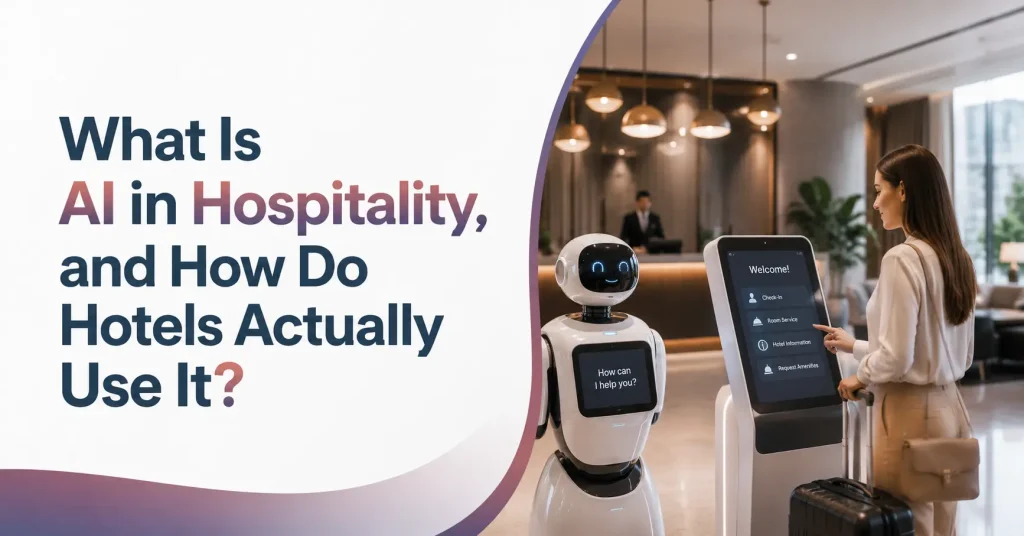
AI is the buzzword every hotel vendor loves, but for most owners it still feels vague. Is it robots at the front desk? A chatbot on the website? Something happening in the background? The truth is more practical, and it is already running inside most hotels, whether staff notice it or not.
AI in hotels simply means software that uses data to predict, automate, and personalize the work a hotel does every day. It is not science fiction. It is the quiet engine behind faster replies, smarter pricing, and stays that feel tailored to each guest.
Here is what it actually means and how real hotels put it to work.
What Is AI in Hospitality?

AI in hospitality is the use of predictive and automated software to handle pricing, guest communication, marketing, and operations using historical and real-time data. Instead of relying on gut feeling, a hotel lets the system spot patterns and act on them.
This is no longer rare. Research shows 98 percent of hoteliers used AI across their operations in the last six months, and on average it now touches 11 of the 19 most common hotel tasks. What was a novelty two years ago is now part of daily operations.
How Do Hotels Actually Use AI?
The best way to understand it is to look at where it shows up. These are the most common, proven uses.
| Area | How Hotels Use AI | The Benefit |
|---|---|---|
| Guest communication | Chatbots and messaging answer questions 24/7 | Faster replies, less front desk load |
| Revenue management | Dynamic pricing sets rates from live demand | Higher revenue per available room |
| Personalization | Tailors offers and recommendations per guest | Better experience, more repeat stays |
| Operations | Forecasts staffing, housekeeping, and maintenance | Lower costs, fewer surprises |
| Upselling | Offers upgrades and add-ons at the right moment | More revenue per guest |
| Reviews | Drafts responses and flags issues early | Stronger online reputation |
Notice the pattern. AI is not one product. It is a layer that quietly improves many parts of the hotel at once, from the booking engine to the housekeeping schedule.
The Real Benefits of AI in Hospitality
Hoteliers who use AI report gains in three clear areas. The value is practical, not theoretical.
- Saved staff time: Routine questions and admin get automated, freeing the team for real guest care
- Higher revenue: Smarter pricing and timely upsells lift income without more rooms
- Better guest experience: Faster service and personal touches raise satisfaction scores
- Sharper decisions: Forecasts replace guesswork on staffing, demand, and pricing
- Lower costs: Energy, labor, and waste all shrink when systems run on data
That mix of more revenue and lower cost is exactly why AI in hotels keeps spreading. Around 82 percent of hotels expect their AI use to grow, and 71 percent say it is already having a major impact.
Where AI Still Needs a Human

Here is the honest part. AI is powerful, but it is not a replacement for people. It handles the repetitive and the predictable well, and struggles with the emotional and the complex.
Most hoteliers agree. A majority say the front desk welcome and check-in should stay human-led, even at properties that use AI heavily. A warm greeting, a real apology, and a creative fix for an upset guest still need a person. The smartest setups use AI as the fast first layer and hand the human moments to staff. Used this way, AI amplifies your team instead of removing it.
How Hotels Can Start With AI
You do not need a huge budget or a tech team. The best approach is gradual.
Start with one clear problem, like slow replies or messy pricing, and add AI to that single area first. Prove it works, then expand to the next. Keep your data clean, since AI is only as good as the information it learns from. And always give staff an easy way to step in. A focused pilot that reduces real pressure beats a flashy rollout that no one trusts.
Bringing It Together
So, what is AI in hospitality, and how do hotels actually use it? It is data-driven software that automates communication, sharpens pricing, personalizes stays, and streamlines operations. It is already standard, it saves time and grows revenue, and it works best alongside people, not instead of them. Hotels that adopt it thoughtfully run smoother on busy days and give guests a better stay, often without the guest ever noticing the technology at all.
FAQs
What is AI in hospitality? It is software that uses data to automate and improve hotel work, from guest communication and pricing to marketing and operations. It predicts patterns and acts on them, so hotels rely less on guesswork and more on real information.
How do hotels use AI today? Hotels use AI for chatbots and guest messaging, dynamic pricing and revenue management, personalization, staffing and housekeeping forecasts, upsell automation, and drafting review responses. Most of it runs quietly in the background of daily operations.
Will AI replace hotel staff? No. Current AI mostly supports staff rather than replacing them. It handles repetitive tasks and instant answers, while people handle the emotional, complex, and personal moments. Most hoteliers say key touchpoints like check-in should stay human-led.
How can a small hotel start using AI? Begin with one problem, such as slow guest replies or manual pricing, and add AI there first. Keep your data clean, prove the value with a small pilot, and expand step by step. You do not need a big budget or a technical team to start.