
How Hotels Can Personalize Every Guest Stay (And Why It Matters More Than Ever)
By Foodle+ Team • 21 Aug • 7 MINS READ
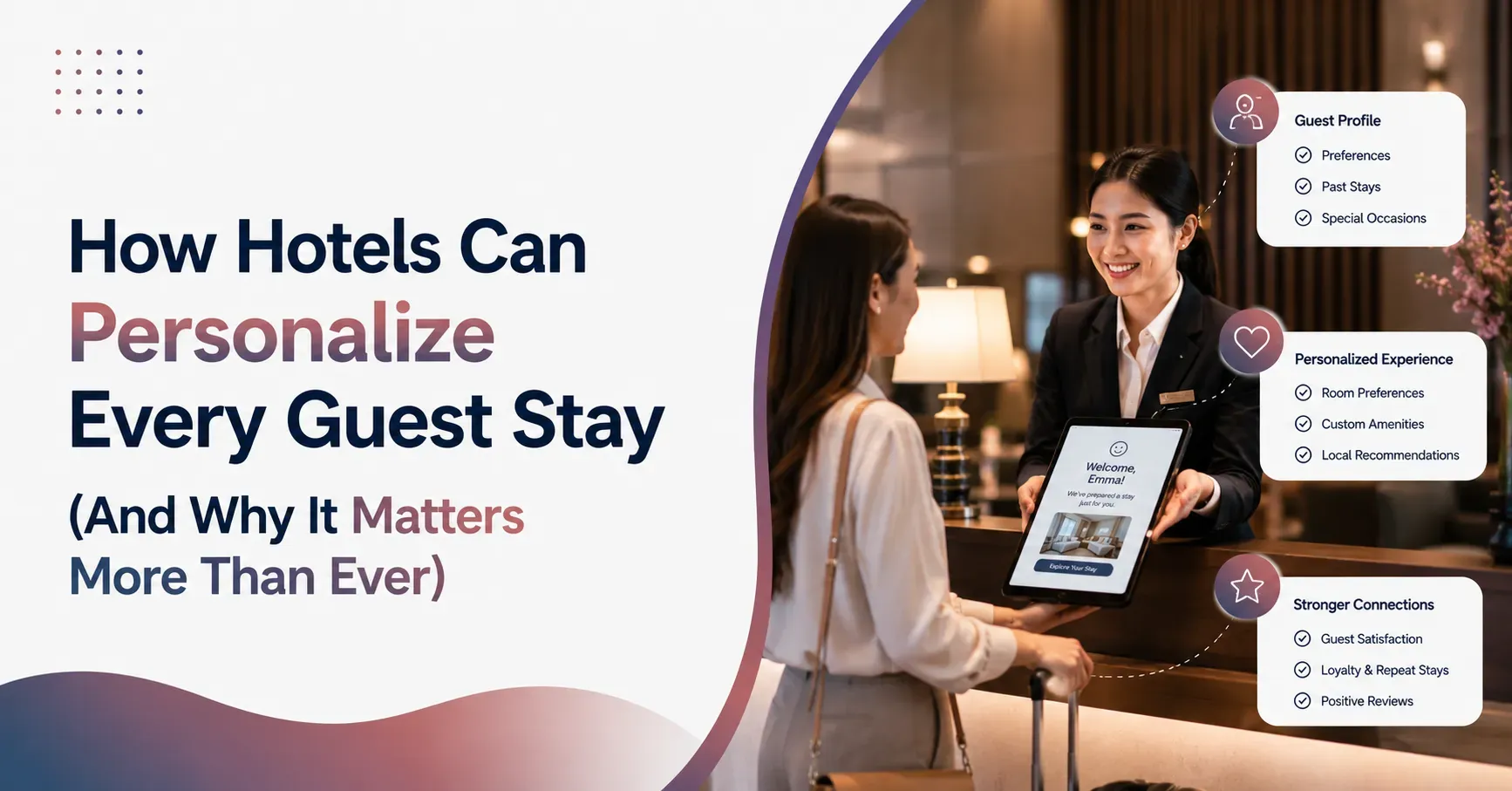
A guest who feels recognized is far more likely to return than one who receives the same generic experience as everyone else.
That's why hotel guest personalization has become one of the biggest differentiators in today's hospitality industry. Guests no longer expect hotels to simply provide a clean room, they expect experiences tailored to their preferences, whether that's a preferred room type, dietary choices, communication channel, or special occasion.
According to a Deloitte report, consumers are increasingly willing to share their personal preferences in exchange for more relevant and personalized experiences. For hotels, this means personalization is no longer a luxury, it's an expectation.
The good news? Delivering a personalized guest experience doesn't always require a luxury budget. It requires understanding your guests and using that information to make every interaction more meaningful.
What Is Hotel Guest Personalization?

Hotel guest personalization is the practice of tailoring services, communication, and experiences based on an individual guest's preferences, behavior, and previous stays.
Instead of offering identical experiences to every guest, hotels use available data to provide more relevant recommendations and services.
For example:
- Remembering a guest's preferred room floor
- Offering vegetarian meal recommendations
- Sending personalized pre-arrival messages
- Preparing rooms for birthdays or anniversaries
- Suggesting activities based on previous bookings
These small touches create memorable experiences that guests genuinely appreciate.
How Hotels Can Personalize Every Guest Stay
1. Build Detailed Guest Profiles
The foundation of hotel guest personalization is collecting useful guest information, not just names and phone numbers.
Hotels can securely store preferences such as:
- Room type
- Pillow preference
- Dietary restrictions
- Favorite beverages
- Preferred check-in time
- Language
- Special occasions
When guests return, staff can use this information to deliver a much smoother experience without asking the same questions again.
2. Personalize Communication Before Arrival
Guest experience begins long before check-in.
A personalized pre-arrival message can include:
- Booking confirmation
- Weather updates
- Check-in instructions
- Airport transfer options
- Local recommendations
- Early check-in availability
Guests feel more prepared, while hotels reduce front-desk inquiries.
3. Recommend Services Based on Guest Preferences
Instead of promoting every service to every guest, recommend what is actually relevant.
For example:
Business travelers may appreciate:
- Meeting rooms
- Airport transfers
- Express laundry
Families may be more interested in:
- Kids' activities
- Family dining
- Extra bedding
Couples may respond better to:
- Romantic dinner packages
- Spa treatments
- Late checkout offers
Personalized recommendations increase conversion because they solve real guest needs.
4. Celebrate Special Occasions
Recognizing birthdays, anniversaries, or honeymoon stays creates memorable experiences.
Simple gestures include:
- Personalized welcome notes
- Complimentary desserts
- Room decorations
- Discount vouchers
- Birthday greetings
These experiences often lead to positive online reviews and social media posts.
5. Remember Returning Guests
One of the easiest ways to improve the hotel guest experience is by recognizing repeat visitors.
Imagine arriving at a hotel where the staff already knows:
- Your preferred room
- Your favorite breakfast
- Your usual check-in time
That familiarity makes guests feel valued rather than treated like another reservation.
6. Offer Personalized Upselling
Generic promotions rarely perform well.
Instead, hotels should recommend upgrades based on guest profiles.
Examples include:
- Suite upgrades for couples
- Spa packages for leisure travelers
- Workspace upgrades for business guests
- Adventure tours for vacation travelers
Relevant offers improve guest satisfaction while increasing revenue.
7. Personalize During the Stay
Personalization shouldn't stop after check-in.
Hotels can enhance the stay by:
- Sending dining recommendations
- Offering local event suggestions
- Providing housekeeping updates
- Sharing weather alerts
- Responding quickly to guest requests
Real-time communication helps create a smoother guest experience.
8. Continue the Relationship After Checkout
Guest relationships don't end when they leave.
Follow-up communication can include:
- Thank-you messages
- Feedback requests
- Loyalty offers
- Birthday greetings
- Exclusive discounts
- Destination recommendations
Keeping the relationship active increases the likelihood of repeat bookings.
Why Hotel Guest Personalization Matters
Guest expectations have changed dramatically over the past few years.
Modern travelers compare hotel experiences with brands like Netflix, Amazon, and Spotify, platforms that recommend content based on user preferences. They now expect similar personalization during their hotel stay.
Research by McKinsey shows that companies excelling at personalization can generate higher customer satisfaction and stronger customer loyalty compared to businesses that rely on generic experiences.
For hotels, this translates into:
- Higher guest satisfaction
- More positive reviews
- Increased repeat bookings
- Better loyalty
- Higher ancillary revenue
Simply put, personalization creates happier guests and healthier business performance.
The Role of Technology in Hotel Guest Personalization

Delivering a personalized guest experience manually becomes difficult as guest volumes increase.
Modern hotel technology helps centralize guest data and automate personalization across different touchpoints.
A connected hospitality system can:
- Store guest preferences securely
- Track stay history
- Personalize communication
- Automate guest messaging
- Recommend relevant services
- Generate guest insights
- Connect with CRM, PMS, booking engines, and loyalty platforms
Instead of relying on memory or spreadsheets, hotel teams can access accurate guest information whenever it's needed.
Also Read: Why Guest Never Return To Your Hotel(How to Fix It)
Common Mistakes Hotels Should Avoid
Collecting Data Without Using It
Gathering guest preferences has little value if staff never access or act on the information.
Over-Personalization
Guests appreciate relevance, not intrusion. Hotels should avoid making guests uncomfortable by referencing unnecessary personal details.
Using Generic Promotions
Sending the same promotional message to every guest reduces engagement and lowers conversion rates.
Ignoring Guest Feedback
Reviews and surveys provide valuable insights into guest preferences and should be incorporated into future stays.
The Future of Hotel Guest Personalization
Artificial intelligence, automation, and integrated hotel management systems are making personalization more scalable than ever.
Hotels are increasingly using technology to:
- Predict guest preferences
- Automate personalized communication
- Recommend relevant services
- Improve operational efficiency
- Deliver consistent experiences across multiple properties
As traveler expectations continue to rise, hotel guest personalization will become a competitive necessity rather than a premium offering.
Hotels that invest in understanding their guests today will be better positioned to build loyalty, improve guest satisfaction, and increase long-term revenue.
Also Read: What Is AI in Hospitality, and How Do Hotels Actually Use It?
Final Thoughts
Today's guests remember experiences more than amenities.
A hotel that remembers a returning guest's preferences, celebrates important occasions, and recommends services that genuinely add value creates stronger emotional connections than one offering the same experience to everyone.
By combining thoughtful service with the right technology, hotels can deliver a personalized guest experience that improves hotel guest satisfaction, strengthens loyalty, and sets their property apart in an increasingly competitive hospitality market.
FAQs
What is hotel guest personalization?
Why is hotel guest personalization important?
How can hotels personalize the guest experience?
Does hotel guest personalization increase revenue?
What technology helps with hotel guest personalization?
Related Posts
Guest Experience
Is Self Check-In Actually Worth Installing?
11 Aug
Guest Experience
Why Guests Never Return to Your Hotel (And How to Fix It)
11 Aug
Guest Experience
How Hotels Can Collect More 5-Star Reviews Without Asking Every Guest
6 Aug