Ever notice how hotel guests say one thing but do another? They will tell you they prefer calling down for room service. Then, the moment a QR code is placed in their room, they scan it without thinking twice.
Here is what is actually happening. QR table ordering is growing fast in hotels because it solves real frustrations guests will not always admit out loud. The kind of frustration that builds quietly at the end of a long travel day when all you want is something simple. Food. Now. Without effort.
Here are 7 real reasons why hotel guests actually prefer scanning and ordering from their room over calling room service, even when they claim they do not.
The Gap Between What Guests Say and What They Do
You have probably heard it before. “I prefer speaking to someone.” “I do not want to use my phone for everything.” “It feels too impersonal.” Fair points. But watch what actually happens in your hotel.
That same guest who said they prefer calling? The moment they see the QR code on the bedside table, they pick up their phone and scan it. They scroll through the room service menu while watching TV. They add what they want, tap confirm, and put the phone down. The food comes. They eat. They are happy. No friction anywhere in that chain.
The disconnect is not dishonesty. It is the comfort of familiar habits clashing with something genuinely more convenient. Once guests experience how easy QR table ordering actually is, the hesitation disappears fast. And it rarely comes back.
What the Numbers Actually Show
Here is what research tells us:
- Over 60% of guests have used some form of digital ordering in the past year, and adoption in hotels is rising steadily
- Contactless ordering is not declining post-pandemic. Hotels across the world are reporting permanent adoption because guests keep choosing it on their own
- Guest experience with QR ordering improves significantly once guests try it 2 to 3 times. Initial hesitation drops sharply after the first successful use
- Average order sizes increase 10 to 20% when guests control their own ordering, per QSR Magazine studies. This holds for hotel room service just as much as restaurants
Those are not small shifts. That is real behaviour change happening across thousands of hotel properties.
Reason 1: Hotel Guests Hate the Room Service Phone Call More Than They Admit
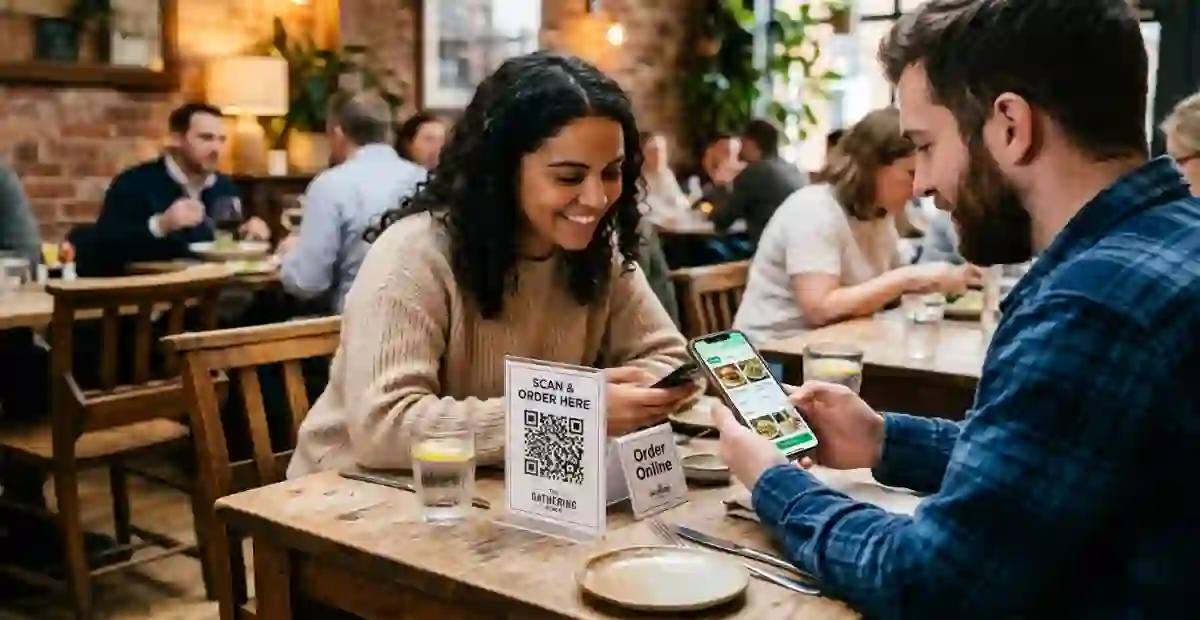
Let us be honest about what calling room service actually involves. You pick up the phone, dial the extension, and wait for someone to answer. Sometimes you get through immediately. Sometimes you are put on hold while the kitchen is busy. When someone finally picks up, you read out your order. They repeat it back. You confirm. You hang up and then spend the next 30 minutes wondering if the “no chilli” actually got noted or if it will show up on your plate anyway.
That is not convenient. That is work. And hotel guests are doing it at the end of a long travel day when they are tired, hungry, and just want things to be simple.
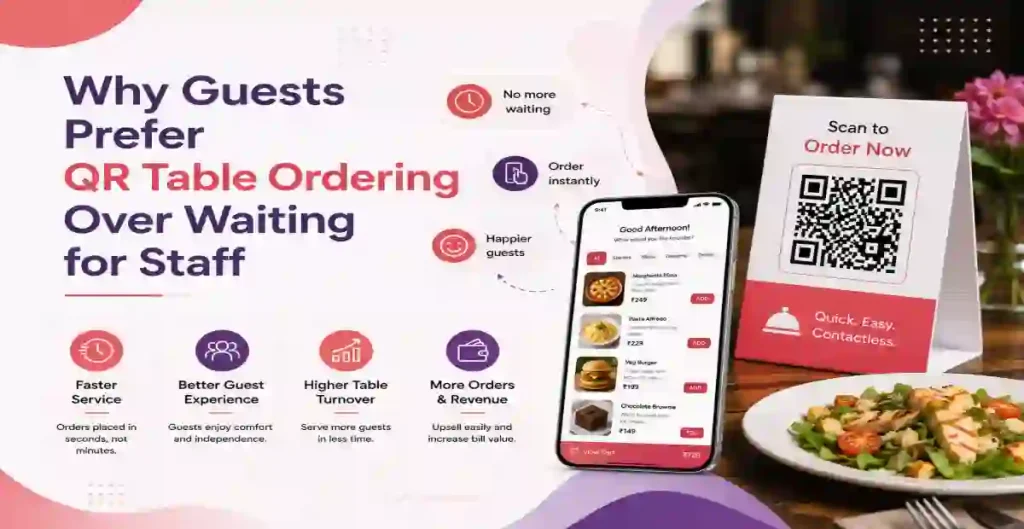
With QR table ordering in the hotel room, all of that disappears. The guest picks up their phone, scans the code on the bedside table, and the room service menu loads in 2 seconds. They browse at their own pace. They tap exactly what they want. They confirm. Done. The order goes directly to the kitchen with every detail intact. And here is the part guests appreciate most. They never had to speak to anyone to make it happen correctly.
This matters most during peak hours. Late evening, when the kitchen is busy. Early morning, when multiple rooms are calling at once. These are the moments when the phone system breaks down, and guests feel it most. This system removes that friction completely.
The Second Order Problem
Here is where it gets even more interesting. The first room service order might go through fine over the phone. But what happens when a guest finishes their meal and realises they want dessert? Or wants to add a drink they forgot to mention?
With a phone-based system, that means another call, another wait, another round of hoping the add-on arrives before they fall asleep. With QR table ordering, they open the menu, tap the item, and confirm. Kitchen gets it in seconds. No second call. No hassle.
Guests who might skip that extra order because the effort feels too high? They go ahead and order it. Revenue goes up, guest experience improves, and the room service team is not fielding the same call twice.
Also Read: How QR Code Ordering System Reduces Staff Workload in Restaurants
Reason 2: Control Feels Better Than Hoping
We just talked about how a phone order leaves guests wondering if their request was noted correctly. But there is a deeper issue here. It is not just about waiting. It is about never really knowing.
When a guest says “no onions, extra sauce, pasta without cheese” over the phone, that request passes through at least two people before it reaches the kitchen. The person who took the call, the kitchen staff who received it. Somewhere in that chain, a detail gets missed. The food arrives wrong. The guest is hungry, slightly annoyed, and now has to call back and wait all over again.
QR table ordering removes that chain entirely. Guests see every customisation option right on screen. They tap exactly what they want. They read through the order before confirming it. What they select is what the kitchen receives, word for word, with nothing lost in between.
For hotel guests with dietary restrictions, this matters enormously. Someone with a serious allergy should not have to trust a telephone chain to get “no peanuts” to the right person. With QR table ordering, they see it confirmed in their own order before they submit. That peace of mind is something no phone call can reliably deliver.
The Psychology of Choice
When hotel guests browse their room service menu through a QR ordering system, something interesting happens. They explore more. They notice items they would not have thought to ask for over the phone. A dessert they would have skipped. A side dish that looks good now that they can see it with a photo. A drink they forgot they wanted.
It is not about pushing guests to spend more. It is about removing the pressure of asking for extras during a rushed phone call. Guests take their time, which leads to choices they actually want but might have hurried past otherwise.
Reason 3: Payment Should Not Be Another Task
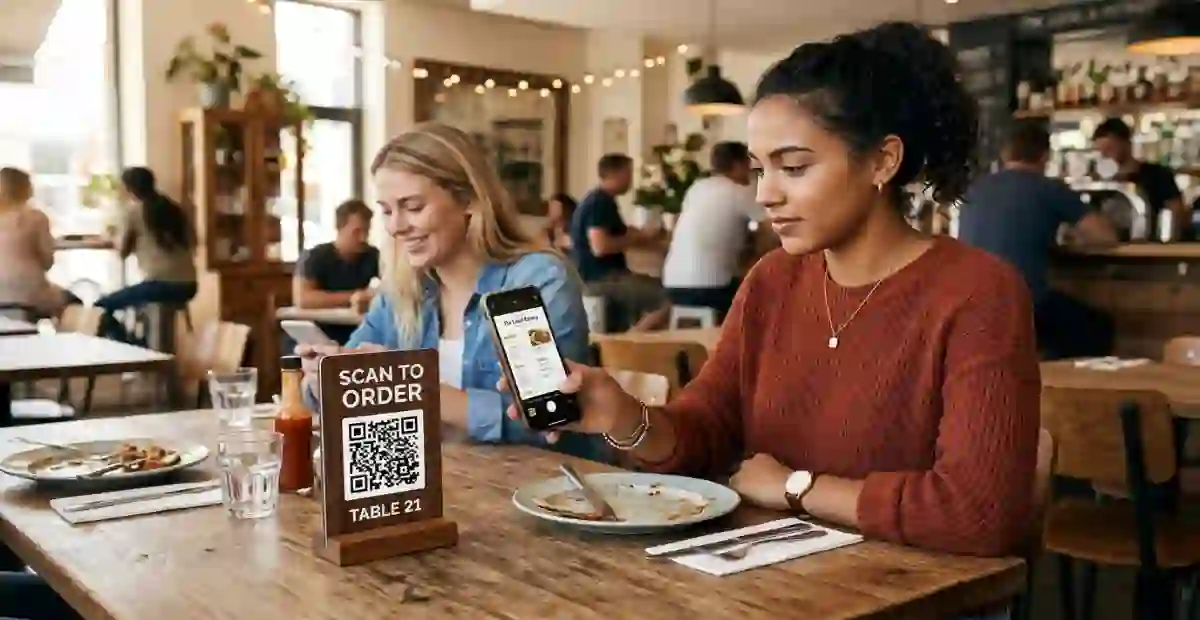
Room service arrives. The delivery is at the door. Now comes the payment. Cash fumbled out of a wallet. A slip occurred while balancing the tray. Or a charge added to the room that the guest will squint at during checkout, wondering if the amount is right.
None of that feels premium. And for a hotel guest who just wanted a quiet, easy meal in their room, it chips away at the whole experience.
With QR table ordering that includes integrated payment, the guest can choose to charge directly to their room account at the point of ordering. No cash at the door. No signature. By the time the food arrives, the payment is already handled. The delivery team hands over the tray, checks that everything looks right, and leaves. Clean, smooth, done.
For business travellers especially, this matters. A clear digital receipt lands in their inbox automatically. No chasing paperwork. No explaining a handwritten slip to the accounts team.
The Tip Situation
Some hotel operators worry that moving away from face-to-face payment hurts tips. The reality is often the opposite. When the payment interface shows suggested tip amounts clearly, and when the room service team has had the time and mental space to deliver well because they were not stuck on the phone all evening, guests tend to tip more generously. The human moment at the door earns the tip. QR table ordering just removes the friction from everything that comes before it.
Also Read: How to Use Digital Menu Ordering to Boost Sales
Reason 4: The Phone Is Already in Their Hand
That guest who says they prefer calling room service? They are already on their phone when they think about ordering. Scrolling through messages, checking emails from the flight, watching something on the screen.
Scanning a QR code on the bedside table takes about 30 seconds. It does not interrupt what they are doing. It does not add effort. It just redirects the phone they are already holding toward something useful and immediate.
The hesitation around QR table ordering is rarely about the technology itself. It is about the unfamiliarity of a new habit. But once a guest tries it once and realises it is faster and simpler than calling, the habit changes quickly. Most people do not go back.
Reason 5: Mistakes Over the Phone Happen More Than Hotels Realise
A hotel guest calls room service and places a detailed order. Two dishes, one with modifications. The person taking the call is managing several calls at the same time. They note it down, relay it to the kitchen, and somewhere in that chain, the “no onion” becomes “extra onion.” Or the medium-spicy becomes extra-spicy. Or the second item gets missed entirely.
As we covered in Reason 2, a modification that gets lost between the phone and the kitchen is frustrating for the guest. But the impact goes further than that. The guest calls back. The kitchen redoes the order. Delivery is now 20 minutes later than expected. And that experience ends up mentioned in the hotel review, not as a kitchen complaint, but as a service complaint.
With QR table ordering, the guest inputs everything directly. There is no relay. No translation. No chance of a detail getting lost. The order arrives in the kitchen exactly as the guest intended it, every single time.
This matters especially for complex orders. Business travellers with specific dietary needs. Families ordering for multiple people. International guests whose accents sometimes create miscommunication over a phone call. The more nuanced the order, the more this system earns its place.
Real Example: The Corporate Travel Scenario
Picture eight corporate travellers at your hotel for a two-day conference. Long flight. Everyone is hungry but exhausted. Half the group wants to order immediately. The other half needs a few minutes.
With a traditional room service setup, the phone line gets hit with multiple calls at the same time. Orders get queued, timings get confused, and some guests end up waiting significantly longer than others.
With QR table ordering in each room, every guest orders independently when they are ready. The kitchen receives all orders clearly, grouped by room, with accurate details. The room service team delivers in sequence without confusion. Every guest gets exactly what they ordered, at close to the same time, without anyone having to coordinate a single call.
That is a hotel stay corporate guests remember, book again, and recommend to their teams.
Reason 6: Instant Menu Updates Matter More in Hotels Than People Think
Here is a scenario that plays out in hotels regularly. The kitchen closes at 11 PM, but keeps cold items available until midnight. With a printed room service card, guests do not know this. They call at 11:20 PM, ask for a hot meal, get told it is not available, and feel disappointed, even though the only issue was a lack of clear information.
With QR table ordering, you update the menu at 11 PM, and the hot section simply disappears. Guests browsing at 11:20 PM see only what is actually available. No disappointed calls. No explaining closing times. No frustration over something that could have been handled silently in the backend.
This works across everything. A dish sells out. A seasonal item gets added. Breakfast ordering opens at 6 AM and closes at 10:30 AM. All of it updates in real time, across every room simultaneously, from one dashboard. Guests always see exactly what they can order right now. No guessing, no back-and-forth, no let-down.
Reason 7: The Hidden Benefit Nobody Talks About
Most hotel guests will not name this directly, but it is real. QR table ordering removes a low-level anxiety that phone-based room service creates without anyone noticing.
We covered in Reason 1 how the phone call itself feels like an effort. But even after the call ends, there is something that lingers. Did they get it right? Will the modification show up? Should I call to confirm? That quiet background worry sits with the guest until the food actually arrives. And if something is wrong, all of it was justified.
QR table ordering closes that loop before it even opens. The guest submitted the order themselves. They saw exactly what was confirmed. There is nothing left to wonder about. They can close the menu, go back to what they were doing, and simply wait for the knock at the door.
For introverted guests or those who dislike phone interactions, this is a genuine relief. For international travellers worried about language barriers over the phone, it removes a real source of anxiety. The stay feels easier. And easier, at the end of a long travel day, is exactly what a good hotel should feel like.
The Staff Side: Why This Makes the Room Service Team’s Job Better
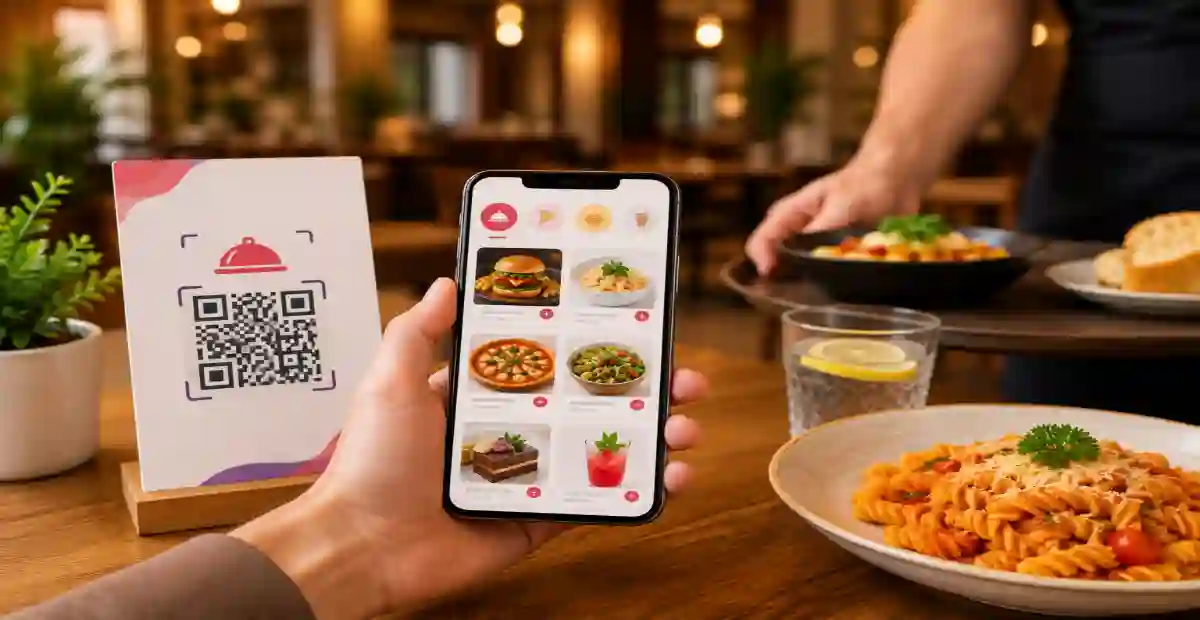
Your room service team is not being replaced by QR codes. They are being freed from the part of the job that wears them down fastest. A phone that rings constantly during peak hours. Orders taken under pressure. Details relayed to the kitchen sometimes arrive differently than they were given.
When that part is handled digitally, the team has something they rarely get enough of during a busy evening. Space. Space to prepare each order properly, deliver it well, and be present with the guest at the door rather than already thinking about the next call coming in.
The real value of a room service team is not in taking orders. It is in the moment of delivery. The way the tray is presented. The quick check that everything looks right. The warmth of a brief interaction that makes a guest feel genuinely looked after. This system creates the conditions for that moment to actually happen well.
What Training Actually Looks Like
Rolling out this system across hotel rooms does not require major changes:
- Show the team how orders come through on the dashboard and what a completed digital order looks like
- Train them to assist any guest who has trouble scanning. It takes 30 seconds and almost always works
- Place clear, simple instructions next to the QR code in each room. “Scan to order room service. No app needed.” That is enough
- Let the team know this makes their job easier. When they see phone volume drop during a busy dinner rush, they will understand it quickly
What About Guests Who Genuinely Prefer Calling?
Not every hotel guest will embrace QR table ordering immediately. Some will always prefer speaking to someone. That is completely fine.
Keep the room service number visible alongside the QR code in every room. When a guest calls in, take the order warmly and without making them feel like they chose the slower option. The goal is to give guests a choice, not take one away.
What you will find over time: most guests who start by calling try the QR option at least once, usually out of curiosity or because the line is busy. After one smooth experience, the majority switch. The assumption that older guests will not use it is also worth revisiting. Many guests in their 60s and 70s use smartphones daily for banking, travel bookings, and messaging. A hotel room service menu is no more complicated than any of those. With a clearly placed code and simple instructions, the barrier disappears faster than most operators expect.
The Business Case: What This Means for Your Hotel’s Numbers
Everything covered in the 7 reasons above, faster ordering, fewer mistakes, better accuracy, higher add-on orders, improved team focus, all of it shows up in the numbers eventually.
Fewer order errors mean less food waste, fewer remakes, and fewer negative mentions in reviews. The cost of a single wrong room service order, including the food cost, the redelivery time, and the guest satisfaction impact, is higher than most properties calculate.
As mentioned earlier, average order values go up by 10 to 20% when guests browse a visual menu at their own pace versus rushing through a phone order. Across a full hotel, across every night, that is meaningful additional revenue without changing the menu or the pricing.
Guest satisfaction scores improve. When room service is fast, accurate, and frictionless to order, it shows up in post-stay surveys. And for hotels, that directly influences future booking decisions.
The return on implementing a hotel QR table ordering system becomes clear quickly. Not just in revenue, but in how smoothly the entire room service operation runs.
Final Thoughts: Watch What Guests Actually Do
Hotel guests might say they prefer the old way. But watch what they actually do when a QR code is placed in their room. They scan it. They order. They wait for the knock at the door without any of the quiet anxiety that used to come with a phone order. And they leave a positive review.
That behaviour tells you everything you need to know. For hotel operators, the question is not whether to implement this. It is how quickly you can do it well. Place the codes in every room. Train the team. Make the menu visual and easy to browse. And let the system handle the order intake so your people can focus on the part that actually matters. Delivering it well.
The guests who said they would never use it? Give them one stay. Most will be scanning before they even unpack.