
Foodle+

The Power Of Automation In Hospitality

How Foodle+ Helped A Hotel Eliminate Delays And Improve Operations By 30%

Discover how Foodle+ helped a hotel reduce delays, automate key processes, and improve overall operational efficiency by 30%.

+0%

Avg. Request Response Time

+0%

Request Completion

+0%

Internal Coordination Time

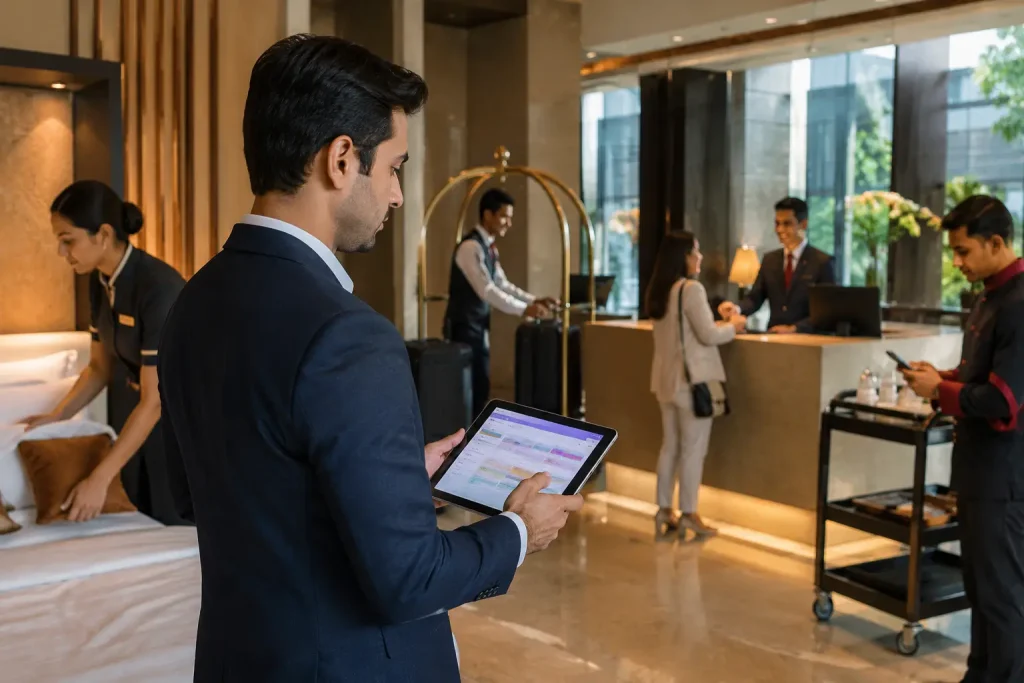
Hotel staff managing guest operations on a tablet

Overview

Introduction

A busy hotel serving both business and leisure travelers was known for its comfortable accommodations and attentive service. With multiple departments handling guest requests throughout the day, the property managed a steady flow of room service orders, housekeeping requests, dining operations, and front desk interactions.

As occupancy remained consistent, daily operations became increasingly demanding. While the hotel had the right team and infrastructure in place, service delays began affecting operational efficiency. Guest requests were taking longer to process, staff coordination required constant follow-ups, and departments often worked in separate workflows. The challenge was not effort, but execution.

Before vs after

The Hidden Problem

The core challenge the property faced was clear: operational delays that impacted service speed and guest satisfaction. As guest activity increased, the hotel's existing process struggled to keep pace. When the Foodle+ team analyzed the workflow, several issues became evident.

Key Issues

  • Guest requests were being communicated through multiple channels.
  • Staff relied heavily on phone calls and manual coordination.
  • Departments lacked a centralized request management system.
  • Task assignments were not always reaching the right team immediately.
  • Request tracking was limited, making follow-ups difficult.
  • Peak hours created bottlenecks across operations.

Because of these gaps, even simple requests often took longer than expected to fulfill. The hotel had a capable team, but without a structured workflow, operational efficiency was suffering.

What Foodle+ Enabled

To solve this, the hotel implemented Foodle+ as an operational workflow and guest service platform. The focus was simple: make communication faster, task management easier, and request handling more organized. Instead of changing existing operations completely, Foodle+ streamlined how requests moved across departments.

  • QR-based guest request access.
  • Centralized service management through a single platform.
  • Automated task routing to the correct department.
  • Real-time WhatsApp notifications for staff.
  • Live request tracking and status updates.
  • Performance visibility through a centralized dashboard.

The Insight That Changed Everything

Staff Received Instant WhatsApp Notifications Whenever A Guest Request Was Submitted.

This reduced the need for manual follow-ups and allowed teams to respond faster without switching between multiple communication channels.

Rollout

How It Was Implemented

1

Week 1–2

Onboarding & Training

The hotel onboarded service categories and department workflows onto Foodle+. Teams were trained to receive and manage requests digitally through the platform.

2

Week 3–4

Live Request Flow

Guest requests started flowing through the new system. Automated routing reduced communication delays, and departments began responding faster.

3

Month 2–3

Optimize Workflows

The hotel reviewed operational data and optimized workflows. Common bottlenecks were identified and resolved, improving coordination between departments. This phased implementation allowed the hotel to improve operations without disrupting daily service.

Hotel staff managing guest operations on a tablet
Outcomes

Results

+0%Avg. Request Response Time+0%Request Completion+0%Internal Coordination Time

Within the first few weeks, the hotel noticed a significant improvement in how requests were managed.

Tasks that previously required multiple follow-ups were now automatically routed to the appropriate department. Teams spent less time coordinating internally and more time focusing on guest service.

As communication became faster and more structured, service delivery improved across the property. By the end of 90 days, the hotel achieved a measurable improvement in operational efficiency without increasing staffing levels. The gains came from better coordination, faster request handling, and more effective workflow management.

Performance data

Data Snapshot

+0%

Average Request Response Time

15 minutes6 minutes

+0%

On-Time Request Completion

68%89%

+0%

Internal Coordination Time

12 mins5 mins

Conclusion

The hotel already had the resources needed to deliver excellent service. The challenge was ensuring those resources worked together efficiently.

By improving communication and automating request workflows, Foodle+ helped eliminate operational delays and create a more organized service environment. The result was faster response times, better coordination across departments, and a smoother experience for both guests and hotel teams.