Your guest checks in at 10 PM after a long flight. They’re hungry. But picking up the phone to call room service? That feels like too much effort.
That’s where QR code ordering changes things. A quick scan from the room, and the guest is browsing your full menu, adding a late-night snack, maybe even a bottle of wine. No phone call. No waiting on hold. No miscommunication. The global QR code market has hit $15.23 billion in 2026, growing at 16.82% annually, and hospitality is among the highest-adoption verticals. This isn’t a trend anymore. It’s how hotels operate now.
This blog breaks down the real advantages of QR code ordering for hotels. Not theory. Not buzzwords. Just what actually changes when a property makes the switch, and why it matters for revenue, operations, and guest satisfaction.
1. Guests Order More When They Don’t Have to Ask
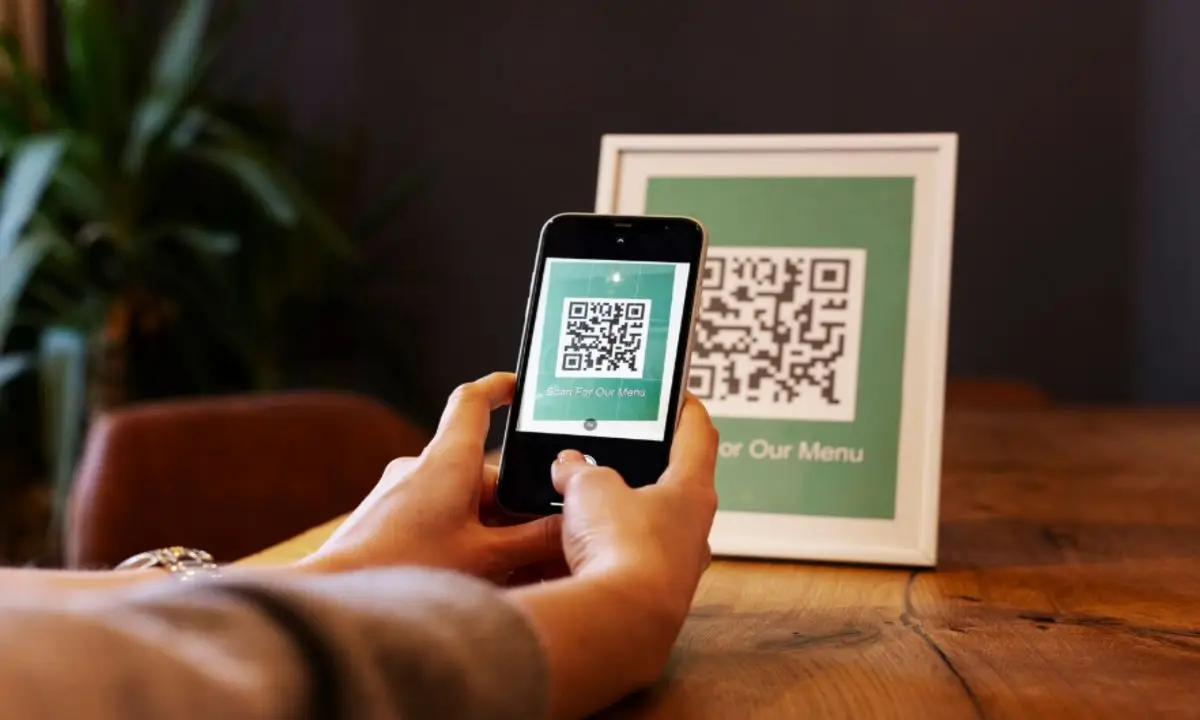
Here’s a pattern most hotel managers already know. Guests skip room service because the process feels slow or awkward. Calling the front desk, waiting for someone to answer, repeating the order twice. It’s friction. And friction kills spending.
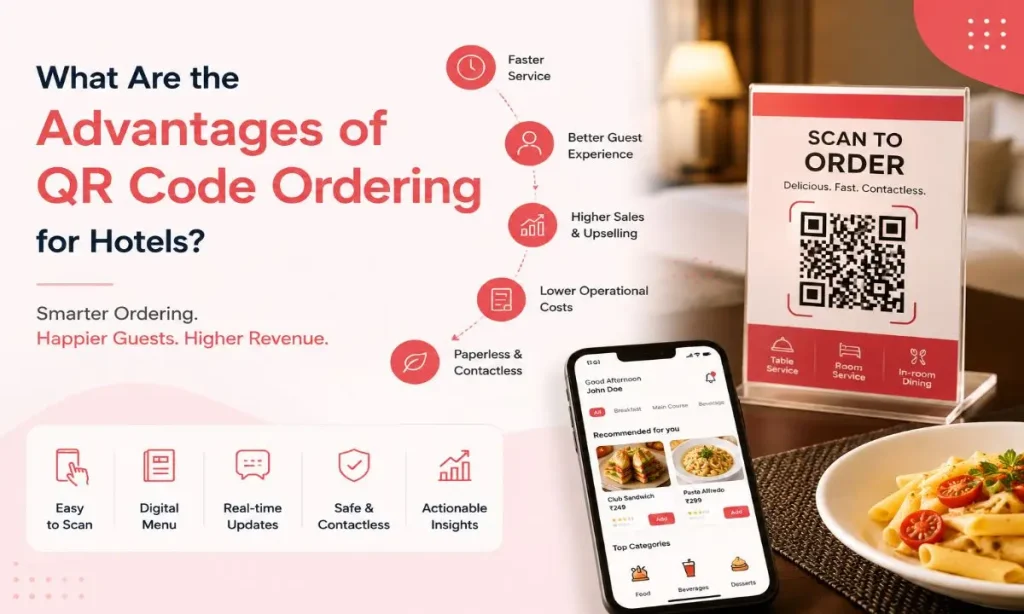
QR code ordering removes that friction completely. The guest scans a code in their room, sees a visual menu with photos and prices, adds items to their cart, and confirms. Done. The order goes straight to the kitchen or the relevant department. No middleman. No delay. Hospitality venues using QR code ordering report up to 30% higher average order values when guests order via mobile compared to traditional table or phone service.
Why This Matters for Hotel Revenue
- Guests tend to browse more when there’s no pressure from a staff member waiting on the line. That extra dessert, that second drink, that spa add-on? It gets added because it’s easy to tap “yes.”
- Visual menus with photos convert better than a voice-based order over the phone. A brownie with ice cream photo sells itself.
- Late-night orders go up significantly. Guests who’d never call the front desk at midnight will happily tap through a digital menu at 12:30 AM.
- Room upgrades, early check-in, late checkout, and celebration packages can all be placed alongside food items on the same ordering interface.
That’s the core of it. When you make ordering easy, people order more. Not because you pushed them. Because you removed the barrier.
2. Your Staff Gets Time Back for What Actually Matters
Most hotels run lean teams. And a big chunk of staff time goes into answering calls, taking orders, clarifying items, and routing requests manually. QR code ordering takes that entire chain and automates it.
The guest places the order. The system sends it to the right department. Kitchen gets food orders. Housekeeping gets room requests. Spa gets booking requests. No one had to pick up a phone, write anything on paper, or walk across the lobby to relay a message. Hotels that have made this shift report immediate benefits like shorter front-desk queues, lower printing costs, and staff freed to focus on higher-value guest interactions.
What Changes Operationally
- Front desk call volume drops. In busy properties, this alone saves hours of staff time per day.
- Order accuracy improves because the guest types what they want. No mishearing “Diet Coke” as “Sprite” over a crackling phone line.
- Kitchen staff can see all incoming orders on a screen, prioritize, and track preparation time without verbal coordination.
- Managers get a dashboard view of pending, in-progress, and completed requests. Nothing falls through the cracks.
- Staff can focus on face-to-face guest interactions instead of being tied to a phone.
This is where digital ordering for hotels stops being a “nice to have” and becomes a genuine operational shift. You’re not adding more work. You’re removing the busywork.
Also Read: How to Use Digital Menu Ordering to Boost Hotel Room Service Sales
3. Guests Actually Prefer It Now
There was a time when self-service technology felt cold. Impersonal. That’s not the case anymore. According to Oracle Hospitality Research, 73% of travelers say they’re more likely to choose a hotel that offers self-service technology, from contactless check-in to on-demand room service. That number keeps climbing every year.
Modern travelers, especially younger demographics and frequent business travelers, don’t want to call anyone. They want to tap, scroll, pick, and confirm. QR code ordering fits exactly into that expectation. It feels natural because it mirrors how they already order food on apps like Swiggy, Zomato, or DoorDash in their daily lives.
Where Guest Satisfaction Improves
- Speed. A QR code order reaches the kitchen in seconds. A phone call might take 4 to 5 minutes including hold time.
- Control. Guests can review their order, modify it, add notes like “no onion” or “extra pillows,” and confirm at their own pace.
- Transparency. When prices are visible upfront, there’s no bill shock at checkout. Guests feel more in control of their spending.
- Hygiene. No shared menus, no physical brochures. Printed menu elimination reduces the spread of germs and meets the hygiene expectations that guests now take for granted.
- 24/7 availability. The digital menu doesn’t have working hours. Guests can browse and order whenever they want.
And here’s the thing most hoteliers miss. A satisfied guest doesn’t just come back. They leave better reviews. Hotels in 2026 use QR codes primarily for contactless check-in, digital room service menus, in-room information, spa and activity bookings, loyalty program enrollment, and post-stay guest feedback collection. The entire guest journey, from check-in to checkout, can run through a single QR scan.
4. It Costs Almost Nothing to Set Up
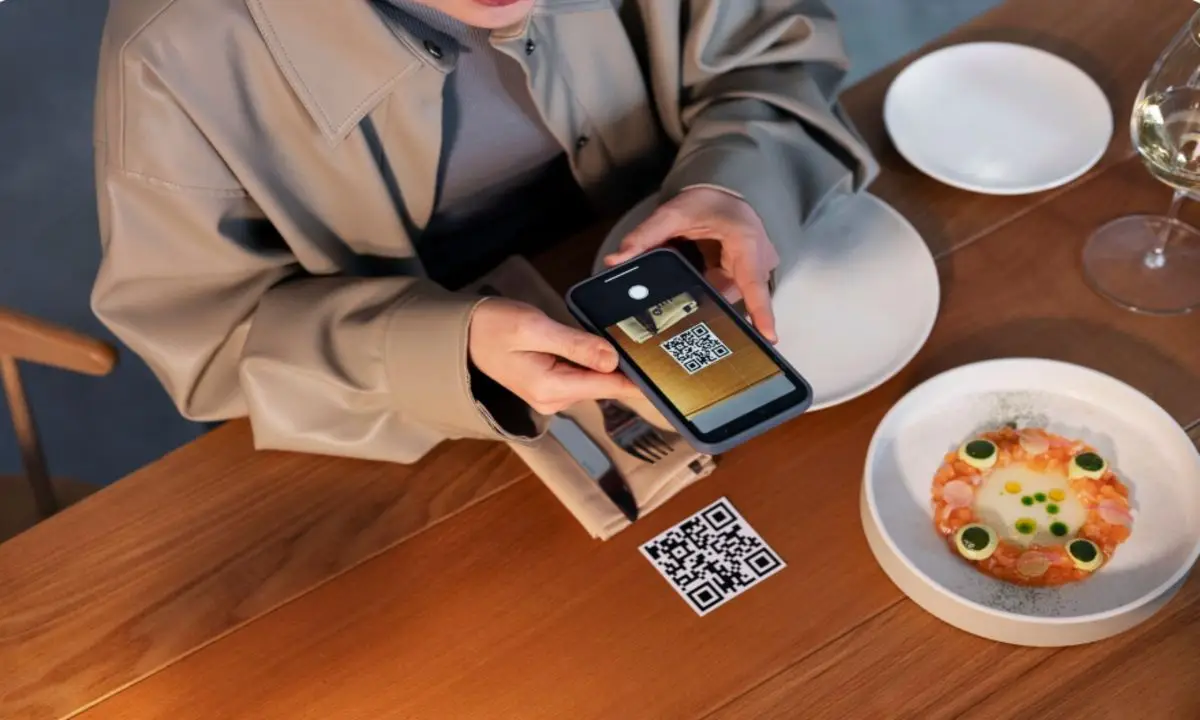
Compared to installing a new POS system or hiring extra staff, QR code ordering is surprisingly affordable. You don’t need hardware. You don’t need app downloads. The guest’s own phone does all the work.
Most hotel guest management platforms, including newer ones built for Indian properties, offer QR code ordering as part of their core package. You generate the code, print it on a card or sticker, place it in the room, and you’re live. Menu updates happen digitally. No reprinting costs.
The Cost Angle Hotels Often Overlook
- Zero printing costs for menus. Change a price, add a seasonal dish, remove an out-of-stock item. All instant, all free.
- No app download required. The guest scans and sees the menu in their phone browser. That’s it. Restaurants and hotels use QR codes to display digital menus that update anytime.
- Data capture happens automatically. Every order gives you insight into what sells, what doesn’t, peak ordering hours, and average spend per guest.
- Venues report a 57% reduction in menu-related complaints like wrong prices, unavailable items, and allergen confusion after switching to digital menus.
For a 20-room boutique hotel or a 200-room resort, the math is the same. QR code ordering pays for itself within weeks, sometimes days.
Also Read: Why Guests Prefer QR Table Ordering Over Waiting for Staff
5. It’s Not Just About Food
This is where most blogs on QR code ordering stop. They talk about menus and room service. But the real advantage of contactless ordering in hospitality goes much further.
Through the same QR interface, hotels can offer spa bookings, activity reservations, airport transfers, celebration setups, paid early check-in, late checkout, laundry requests, and even local experience packages. Every single one of those is a revenue opportunity that would otherwise require a phone call, a visit to the front desk, or a printed brochure that the guest never reads.
The Bigger Picture for Hoteliers
- Cross-department revenue becomes automatic. A guest ordering dinner sees a spa discount on the same screen.
- Guest data builds your CRM. Names, preferences, spending patterns, stay history. All captured without asking the guest to fill out a form.
- Off-season remarketing becomes possible. You know what they ordered, what they liked, and when they visited. Send them a personalized offer six months later.
- Review and rating scores improve because service is faster, communication is clearer, and issues get flagged before they become complaints.
That’s the real advantage of QR code ordering. It’s not just a menu tool. It’s a revenue layer that sits on top of everything your hotel already does, and makes each touchpoint work harder.
Hotels that haven’t adopted this yet aren’t just missing convenience. They’re leaving real money on the table. And in 2026, guests notice.