Your hotel restaurant prints new menus every season. Sometimes every month. Prices change, dishes rotate, a supplier drops out and suddenly the paneer tikka is gone but the menu still says it’s available. Guests order it. Kitchen can’t deliver. Complaint logged.
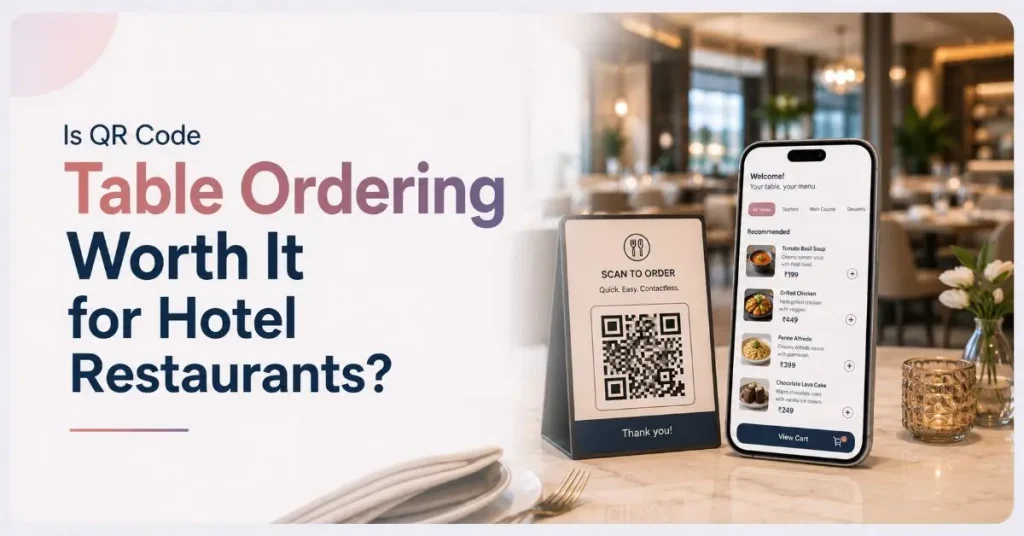
QR code table ordering fixes that specific problem and about a dozen others. Instead of printed menus, guests scan a code at their table, browse a digital menu on their phone, and place the order directly. No app download. No waiting for a server to show up. The order hits the kitchen in seconds. Restaurants with full digital ordering report 20 to 30% higher average ticket sizes, and a Square study found that properties using QR code-based systems see a 15% increase in table turnover. QrcodeMenu Tiger
But does QR code ordering for hotel restaurants actually make sense? Not for a standalone cafe or a quick-service chain. For a hotel. This blog answers that with real numbers, real trade-offs, and zero fluff.
The Revenue Case Is Hard to Ignore
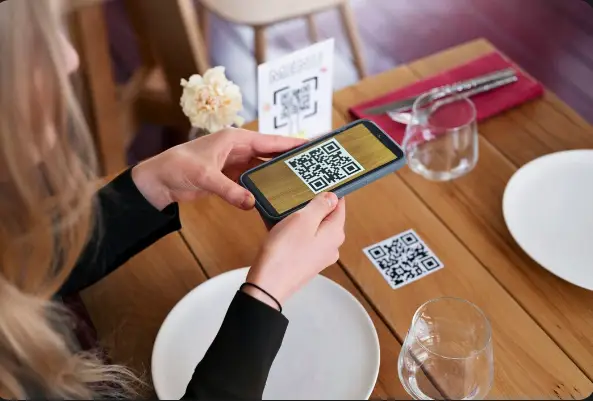
Hotel restaurants have a unique problem. Guests are already on the property. They’re hungry. But the friction between “I want food” and “I’ve placed an order” is surprisingly high. Maybe the restaurant is full. Maybe they’re at the pool and don’t want to walk inside. Maybe it’s 11 PM and they assume the kitchen is closed.
QR code table ordering removes every one of those barriers. The guest scans, browses, and orders from wherever they are. Pool deck, lobby lounge, their room, the restaurant table. And here’s what happens when you remove friction from spending. People spend more. Venues using QR code ordering see up to 30% higher average order values when guests order via mobile compared to traditional table service. That’s not a small bump. On a property doing 50 covers a night, even a 15% lift in average check adds up fast over a month. Supercode
Where the Extra Revenue Actually Comes From
- Visual menus with photos drive impulse orders. A guest who’d normally skip dessert taps “add to cart” when they see a photo of the gulab jamun platter. That decision takes two seconds.
- Suggested pairings and add-ons convert better on screen than through a server’s verbal pitch. “Add a mocktail for ₹149” works when it’s a single tap.
- Late-night orders increase because the digital menu doesn’t close. Guests who’d never call room service at midnight will browse and order through their phone without hesitation.
- Seasonal specials and chef’s picks can sit right at the top of the menu with no new print run. Just update the listing.
- Cross-selling becomes automatic. A guest ordering dinner sees a spa package or breakfast upgrade on the same interface. That’s the real power of digital ordering for hotels. One screen, multiple revenue streams.
The math isn’t complicated. If your hotel restaurant’s average check goes from ₹800 to ₹950 per guest through QR code ordering for hotel restaurants, and you serve 40 to 60 guests daily, you’re looking at ₹6,000 to ₹9,000 in extra daily revenue. Without hiring anyone
Also Read: What Are the Advantages of QR Code Ordering for Hotels?
What Changes for Your Kitchen and Floor Staff
This is where most hoteliers get skeptical. “My staff handles orders fine. Why change?”
Fair question. But think about what your floor staff actually does during a busy dinner service. They walk to the table. Take the order on a notepad. Walk to the POS. Enter it. Walk back if something’s unclear. That cycle, for every table, every order, every modification. Hours of movement that could be spent on actual guest interaction.
With QR code table ordering, the guest places the order themselves. It shows up on the kitchen display. The server’s job shifts from order-taker to experience-maker. They’re now checking if the food arrived well, recommending something for tomorrow’s breakfast, or making sure the anniversary couple has a good table. That’s higher-value work. And that’s what contactless ordering in a hotel restaurant actually enables. Not removing people. Redirecting them.
The Operational Shift in Numbers
- Order accuracy goes up because the guest types exactly what they want. No more “I said no cheese” disputes. The digital order is the record.
- Restaurants switching to digital menus report a 57% drop in menu-related complaints, including wrong prices, unavailable items, and allergen confusion. Supercode
- Kitchen staff can see all incoming orders on one screen, sorted by time, table, or priority. No verbal relay. No missed tickets.
- Independent restaurants save an average of $3,847 per year on menu printing alone after switching to digital menus, based on EasyMenus data tracking 10,000+ restaurants. For a hotel with multiple dining outlets, that figure is significantly higher. Supercode
- Staff can handle more tables per shift without burnout, because digital ordering for hotels automates the most repetitive part of their workflow.
One thing to be clear about. Contactless ordering in a hotel restaurant doesn’t mean eliminating your staff. It means freeing their time. The server who used to spend 60% of their shift taking orders now spends 60% of it making guests feel welcome. That’s a better use of payroll.
What About Guests Who Don’t Want to Use Their Phone?
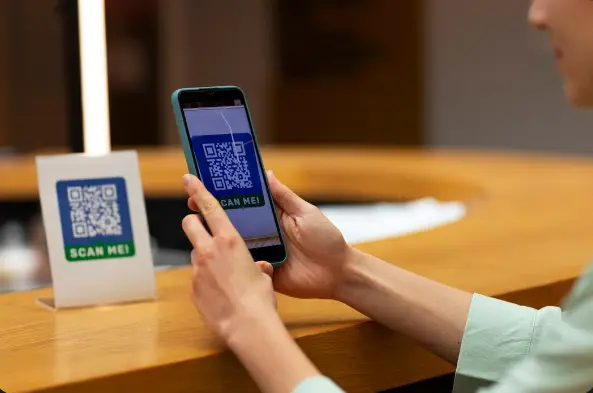
This comes up every time. And it’s valid. Not every guest wants to scan a code. Some prefer a physical menu. Some are older and less comfortable with the process. Some just want to talk to a person.
The answer isn’t “force everyone onto QR code table ordering.” It’s hybrid. Keep a few printed menus behind the host stand. Train your staff to offer both options. But know this: roughly 60% of diners already use QR code menus or promotional offers at restaurants, and 73% of travelers say they prefer hotels that offer self-service technology. The majority already expects it. You’re not pushing them toward something new. You’re catching up with where they already are. Menu TigerDoItQR
Making the Hybrid Model Work
- Place a small branded table tent with the QR code on every table. One line: “Scan to view menu and order.”
- Train servers to say “You can scan the code or I’m happy to take your order directly.” That single sentence handles 90% of resistance.
- For room service, the QR code in the room works perfectly as the primary option. Most guests prefer tapping their phone over calling the front desk at odd hours.
- Feedback forms, review prompts, and loyalty sign-ups can all sit at the end of the ordering flow. No extra process needed. That’s where QR code ordering for hotel restaurants goes beyond just food. It becomes a full guest engagement layer.
The hybrid approach means you get the efficiency of contactless ordering in your hotel restaurant without alienating guests who prefer traditional service. Everyone wins.
Also Read: How a QR Code Ordering System Reduces Staff Workload in Hotels
So, Is It Worth It?
Short answer: yes, for almost every hotel restaurant serving more than 20 covers a day.
The setup cost is minimal. Most guest experience platforms include QR code table ordering as a built-in feature. You generate the codes, print a few table cards, and go live. Menu changes happen digitally, instantly, with zero reprinting cost. Most venues report a payback period between three and six months, and that’s before accounting for revenue uplift from higher average checks and better table turnover. TableQR
The risk of not adopting digital ordering for hotels is now bigger than the risk of trying it. 57% of companies in the food service sector are increasing their QR code investments in 2026. Your competitors are already moving. Your guests already expect it. And every day without it is a day where your restaurant leaves revenue uncollected and your staff spends time on tasks a phone screen could handle in seconds. Qrcode
QR code table ordering isn’t a gimmick. It’s a quiet, practical upgrade that pays for itself and keeps paying. For hotel restaurants, the real question isn’t “is it worth it?” anymore. It’s “how soon can you start?”