
Your front desk is slammed. Three guests are checking in, two phones are ringing, and a fourth guest just asked for extra towels. One of those requests is about to vanish.
Weak guest request management is usually the reason. When calls, walk-ups, and messages all land on one desk at once, things slip. The fix is not more staff. It is a system that spreads the load, routes each request automatically, and tracks hotel response time so nothing goes quiet.
Here are six practical ways to tighten your guest request process when the hotel is busiest. No theory. Just changes you can roll out this season.
Why Hotel Guest Requests Slip Through During Peak Hours

Hotel guest requests get missed during peak hours because too many channels feed into too few people. Calls, walk-ups, and messages hit the front desk together. With no routing or tracking, a towel request gets a quick verbal “sure” and then disappears the second the next guest steps up.
The pattern is predictable. Check-in rush at 2 PM. Dinner orders around 8. Checkout crush at 11. The numbers back this up. Slow response is the top complaint across customer service, and nearly half of callers hang up after waiting two minutes. That hang-up is often a request you never even knew existed.
Where requests usually die
- Everything routes to one desk with no priority order
- Verbal requests never get logged anywhere
- Shift changes drop requests that were “in progress”
So the problem is structural. Good news? Structure is fixable.
How Can Guest Request Management Reduce Missed Requests During Peak Hours?
Good guest request management reduces missed requests during peak hours by giving guests a digital way to ask, routing each request to the right team automatically, and setting response-time targets that managers can actually see. The goal is simple. Take the load off the front desk so it stops being the single point of failure.
Here are the six fixes that work.
1. Let Guests Send Requests Digitally
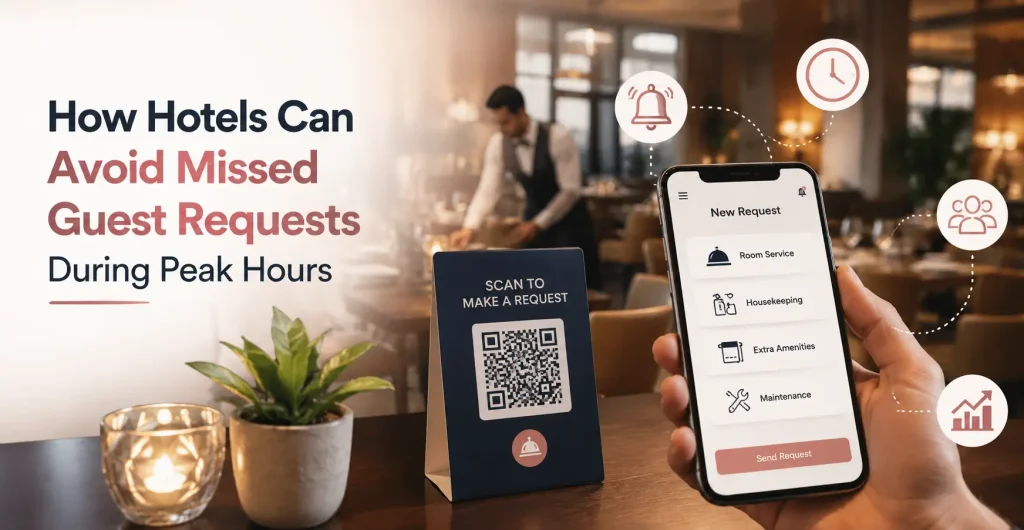
Give guests a way to ask without picking up the phone or standing in line. A request typed at 9 PM lands as a ticket, not a maybe. This alone cuts front desk traffic and kills the “but I told someone earlier” problem.
What this looks like in practice
- A QR code in the room for service requests and orders
- Messaging through WhatsApp or a guest portal
- Every request arrives as a logged ticket, not a verbal ask
2. Route Each Request to the Right Department Automatically
A towel request should reach housekeeping. A leaking tap should reach maintenance. The manual relay through the front desk is exactly where peak-hour requests die. Automatic routing is the backbone of catching every guest ask.
Why automatic routing matters
- Housekeeping, maintenance, and F&B each get their own queue
- No verbal handoffs that get forgotten mid-rush
- The right person sees the request within seconds
3. Set Response-Time Targets and Track Them
A request with no deadline is a request that waits. Set a first-response target for each type, then track hotel response time against it. Some properties run a 15-minute target during peak occupancy and stretch it during quieter hours.
How to make targets stick
- Different targets per request type, like maintenance versus housekeeping
- A live view of open requests and how long each has waited
- Breach alerts so a manager steps in before a guest complains
4. Forecast Peak Windows and Pre-Staff
Peak hours are not random. Friday check-ins, long weekends, and dinner service repeat every single week. Look at past data, spot the spikes, and put extra hands on before the rush. Smart front office operations plan for the surge instead of reacting to it.
Smart staffing moves
- Pull request volume by hour and day of the week
- Cross-train other team members to handle overflow check-ins
- Pre-authorize payments the night before to speed up arrivals
A waiter who clears check-ins for twenty minutes can save a queue that would bury the desk.
5. Keep One Shared View Across Shifts
Most requests die at shift change. The afternoon team knows about the broken AC in 304. The night team does not. A shared dashboard carries every open request across the handover, so nothing resets to zero at 11 PM.
What a shared view should show
- One screen with all open and pending requests
- Status visible to every department, not just the front desk
- Notes that carry over during handover
6. Send Proactive Updates Before Guests Ask
Half of peak-hour requests are just guests chasing an answer. Tell them the room will be ready by 3. Warn them dinner runs busy at 8. A quick heads-up stops a second call before it starts and eases the front desk during peak hours.
Updates worth automating
- Auto-notify on room readiness and request status
- Flag busy dining hours and suggest off-peak slots
- Confirm receipt the moment a request comes in
When guests feel informed, they stop calling to check. The desk breathes.
Also Read: How Can Hotels Reduce Front Desk Wait Times During Peak Check-In Hours?
Bringing It Together
Strong guest request management comes down to one thing. Stop too much from landing on too few people, with nothing to catch what slips. Give guests a digital channel, route requests automatically, watch your hotel response time, and carry everything across shifts. Do that, and the 2 PM rush stops costing you reviews and repeat bookings.
FAQs
What is guest request management in a hotel? Guest request management is how a hotel captures, routes, and tracks every guest ask, from extra towels to maintenance fixes. A good setup logs each request, sends it to the right team, and watches response time, so nothing gets lost during busy periods.
Why do hotels miss guest requests during peak hours? Hotel guest requests get missed when too many reach too few staff at once. Calls, walk-ups, and messages all hit the front desk together. Without automatic routing or tracking, a verbal request gets a quick “sure” and then gets forgotten in the rush.
How fast should a hotel respond to a guest request? Many properties target a first response within 15 minutes during peak occupancy and a little longer off-peak. A quick hotel response time matters because nearly half of callers hang up after two minutes, and slow replies are a top guest complaint.
How can small hotels improve front office operations during peak hours? Use data to spot the busy windows, then cross-train staff to cover overflow. Add a self-service channel so guests handle simple asks themselves. Better front office operations come from smarter routing and forecasting, not always from hiring more people.