
Hotel PMS in India: Features Hotels Need in a Property Management System
By Foodle+ Team • 17 Sept • 8 MINS READ
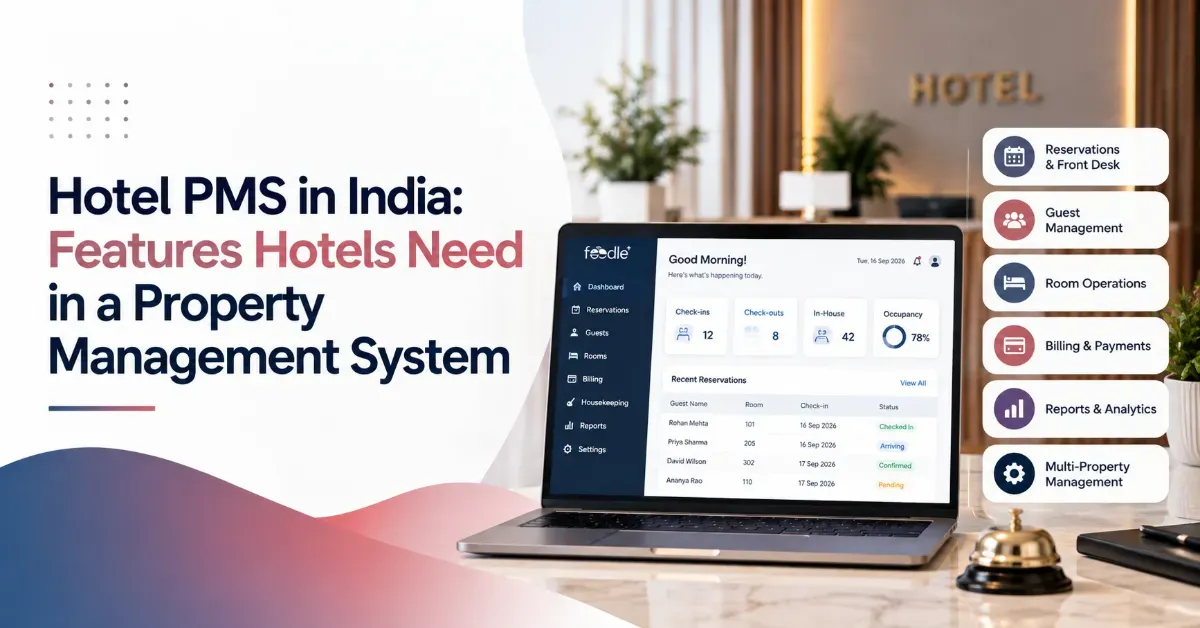
A property management system for hotels in India needs five things to actually work: GST billing that applies the right slab (0%, 5%, or 18%) automatically, real-time sync with Indian OTAs like MakeMyTrip and Goibibo, local payment handling for UPI and cards, solid front desk and housekeeping basics, and reports built for both daily management and GST filing.
Most hotel software sold in India was built for a different tax system, a different OTA mix, and a different payment stack.
That gap shows up fast. It appears at month-end reconciliation, during a GST audit, or the first time a booking from an Indian OTA doesn't sync correctly.
GST rules for hotels changed again in September 2025. OTA settlements in India also carry commission, TDS, and GST layers that generic software often gets wrong.
A hotel property management system India teams can actually run on needs to handle all of this natively, not as an afterthought.
- GST Billing: The Feature Most Software Gets Wrong
- Indian OTA Connectivity, Not Just Global Channels
- Local Payment Methods and Accounting Integration
- Front Desk, Housekeeping and Reservations
- Reports That Work for Both Management and Tax Filing
- What Happens When Software Gets This Wrong
- Questions Worth Asking Before You Choose
- Bringing It Together
- Frequently Asked Questions
GST Billing: The Feature Most Software Gets Wrong

GST on hotel rooms in India isn't a flat rate. Since the GST 2.0 revision effective September 22, 2025, the slab depends on the actual amount charged per room, per night, not the published rack rate.
Here's the part most software gets wrong: the slab applies to the invoiced amount, not the listed rate.
A room listed at ₹8,000 but sold at ₹6,500 after a discount is taxed at 5%, not 18%. If the PMS calculates GST off the rack rate instead of the final billed amount, the hotel either overcharges guests or under-reports tax.
A hotel PMS software India properties can rely on should apply the correct slab automatically, based on what the guest is actually charged that night, including after discounts and dynamic pricing changes.
Indian OTA Connectivity, Not Just Global Channels
A large share of bookings for Indian hotels come through domestic OTAs, not just global platforms.
Domestic OTAs: MakeMyTrip, Goibibo, EaseMyTrip, Yatra, Cleartrip Global OTAs: Booking.com, Agoda, Expedia
A PMS for hotels in India that only connects well to global channels is missing a big share of where Indian demand actually comes from.
The common failure mode is manual updates. When front desk staff update rates on each OTA extranet separately, double-bookings and rate mismatches follow.
A property management system for hotels in India needs real-time, two-way sync. A booking on MakeMyTrip should instantly block that room everywhere else, including Goibibo and the hotel's own direct channel.
OTA settlements also work differently than a direct booking. Here's what actually happens behind a single OTA payout:
- The OTA deducts its commission, typically 15% to 25%
- TDS under Section 194H applies at 5% on that commission
- GST also applies to the commission amount
- The hotel stays the GST supplier of record for the room, even though the OTA collected payment from the guest
A PMS needs to track gross booking value, commission, TDS, and GST separately, not just show one lump net deposit.
Also Read: How to Connect Your Hotel to MakeMyTrip and Goibibo Through a Channel Manager
Local Payment Methods and Accounting Integration
UPI is now a default expectation at the front desk, alongside cards and cash.
A hotel property management system India staff use daily should reconcile UPI payments as easily as card settlements, without a separate manual log.
Accounting integration matters just as much. Many Indian hotels run their books on Tally.
A PMS that exports clean, GST-slab-separated data into Tally saves the accounts team from re-entering transactions by hand every month.
Front Desk, Housekeeping and Reservations

The core operational basics still need to work well:
- Fast check-in and check-out
- Real-time room status updates
- Housekeeping task assignment
- A reservation calendar reflecting availability across all channels
These aren't differentiators on their own, since most PMS platforms cover them. But they're the foundation everything else sits on.
A GST-ready billing engine doesn't help much if the front desk is still fighting a clunky check-in flow.
Reports That Work for Both Management and Tax Filing
Hotel management and the finance team usually need different things from the same data.
A hotel PMS software India properties use for both purposes should generate reports that satisfy both audiences from the same data. No one should have to manually rebuild a GST summary from scratch.
What Happens When Software Gets This Wrong
When a PMS doesn't handle GST slabs correctly, hotels are exposed at audit time.
Mismatched invoicing, whether it's the wrong slab or unclear B2B/B2C separation, is exactly the kind of error that surfaces during a GST review.
The same applies to OTA reconciliation. If a PMS only shows the net amount an OTA deposits, without breaking out commission, TDS, and GST, the accounts team is left guessing at figures that should be traceable.
That gap tends to surface at the worst time, during a compliance check or a dispute with an OTA over a settlement.
Questions Worth Asking Before You Choose
A few direct questions to a vendor reveal how well their software actually fits Indian operations:
1. Does GST calculation use the invoiced amount per booking, or the rack rate?
2. Which Indian OTAs does the system sync with directly, beyond global platforms?
3. Can it export GST-slab-separated data into Tally or similar accounting software?
4. Does reporting separate gross booking value, commission, TDS, and GST per OTA?
5. Does it support UPI reconciliation at the front desk without manual logging?
Ready to Simplify GST Billing at Your Property? Book a Demo of Foodleplus and see how GST-ready billing works alongside front desk, reservations, and reporting on one platform.
Bringing It Together
A property management system for hotels in India needs to do more than manage rooms and reservations.
It needs to get GST slabs right on every invoice, sync with the OTAs guests actually book through, reconcile local payments, and report cleanly for both operations and tax filing.
Getting these fundamentals right up front avoids the reconciliation headaches and audit risk that come from software built for a different market.
FAQs
What is the current GST rate for hotel rooms in India?
Which OTAs does a hotel PMS in India need to connect with?
Why do global PMS platforms sometimes struggle with Indian hotel operations?
How is GST handled on bookings made through an OTA?
Related Posts
Property Management System
Best Hotel PMS Software: How to Choose the Right System for Your Hotel
19 Sept
Property Management System
PMS vs Channel Manager: What's the Difference and Do Hotels Need Both?
25 Aug
Property Management System
Cloud PMS vs Traditional PMS: Which Is Better for Modern Hotels?
19 Aug