
How Can Hotels Handle Language Barriers With Foreign Guests?
By Foodle+ Team • • 11 MINS READ
Quick answer: You can handle language barriers with foreign guests by talking slowly with easy words, showing pictures, and writing important things down. You can also use a translation app with short sentences. The best fix is to give guests your menu and request forms in their own language, so they can read and ask for things by themselves.
It was 11 o'clock at night when a tired couple walked up to the front desk. They smiled and said something, but the receptionist could not understand a single word. The receptionist smiled back and started talking louder, but that did not help at all.
Then the couple started talking faster, and everyone got a little confused. After five long minutes and a lot of pointing at a phone, the couple finally got their room key. They went upstairs, but they still did not know what time breakfast was.
Maybe this has happened at your hotel too. Language barriers with foreign guests happen every day, and they are nobody's fault. The good news is that you don't need staff who speak ten languages to fix this. You only need a few simple habits and the right tools, and this guide will show you all of them.
- 8 Simple Ways to Handle Language Barriers With Foreign Guests
- Where Language Gaps Show Up During a Stay
- Multilanguage Guest Support Without Hiring Multilingual Staff
- Which Languages Should Your Hotel Support?
- Communicating With International Guests: Small Things That Help
- Don't Forget the Paperwork
- How Foodleplus Helps With Multi-Language Support
- Frequently Asked Questions
8 Simple Ways to Handle Language Barriers With Foreign Guests

1. Talk slowly, not loudly
When someone doesn't understand us, we often start talking louder. But a louder voice does not make a new language easier to understand. Talk slowly instead, and use short and easy words. For example, say "Breakfast is at 7" instead of "Our free breakfast begins at seven o'clock in the morning."
2. Show things instead of only saying them
Pictures and hands can say a lot without any words. If a guest asks where the pool is, show them a small map and draw a circle on it. You can also put up signs with simple pictures, like a cup for the café or a bed for the rooms. Everyone in the world can understand a picture.
3. Write the important things on a card
Many people can read a new language better than they can hear it. So write down the Wi-Fi password, the breakfast time, the checkout time and the front desk number on a small card. Give this card to every foreign guest when they check in, and they can look at it any time they forget.
4. Use a translation app the right way
A translation app on your phone can be a big help. Type one short sentence at a time, because long sentences often come out wrong. Show the screen to the guest and let them type their answer back. Please never type a guest's passport number or card number into a free app, because that information should stay private.
5. Learn a few words in your guests' languages
You don't need to learn a whole new language. Just learn small words like "hello," "thank you," "sorry" and "welcome" in the languages your guests speak most. When a guest hears "thank you" in their own language, they feel happy and welcome, even if the rest of the talk is in English.
6. Give guests your menu and forms in their own language
This is the most helpful step of all. When a guest can read your menu in their own language, they can choose food without asking anyone for help. When they can read your service list, they can ask for a towel or a cab all by themselves. This is called multilanguage guest support, and it works all day and all night, even when nobody at the desk speaks that language.
Foodleplus gives hotels this kind of multi-language support. Guests scan a QR code in their room, pick their language, and see the menu and request forms in that language.
7. Let guests ask for things in writing
Many guests feel shy when they have to speak a new language on the phone. So give them an easy way to ask for things in writing instead. For example, they can scan a QR code in the room and simply tap on what they need. Tapping is much easier than trying to explain something in a language you don't know well.
8. Always check that the guest understood
When you ask "Okay?", most guests will say yes, even if they did not understand. So ask them to show you instead. If you told them their room number, ask them to point to it on the key card. If you told them the breakfast time, ask them to show it on the card you gave them. This simple check stops small mix-ups before they turn into big problems.
Where Language Gaps Show Up During a Stay
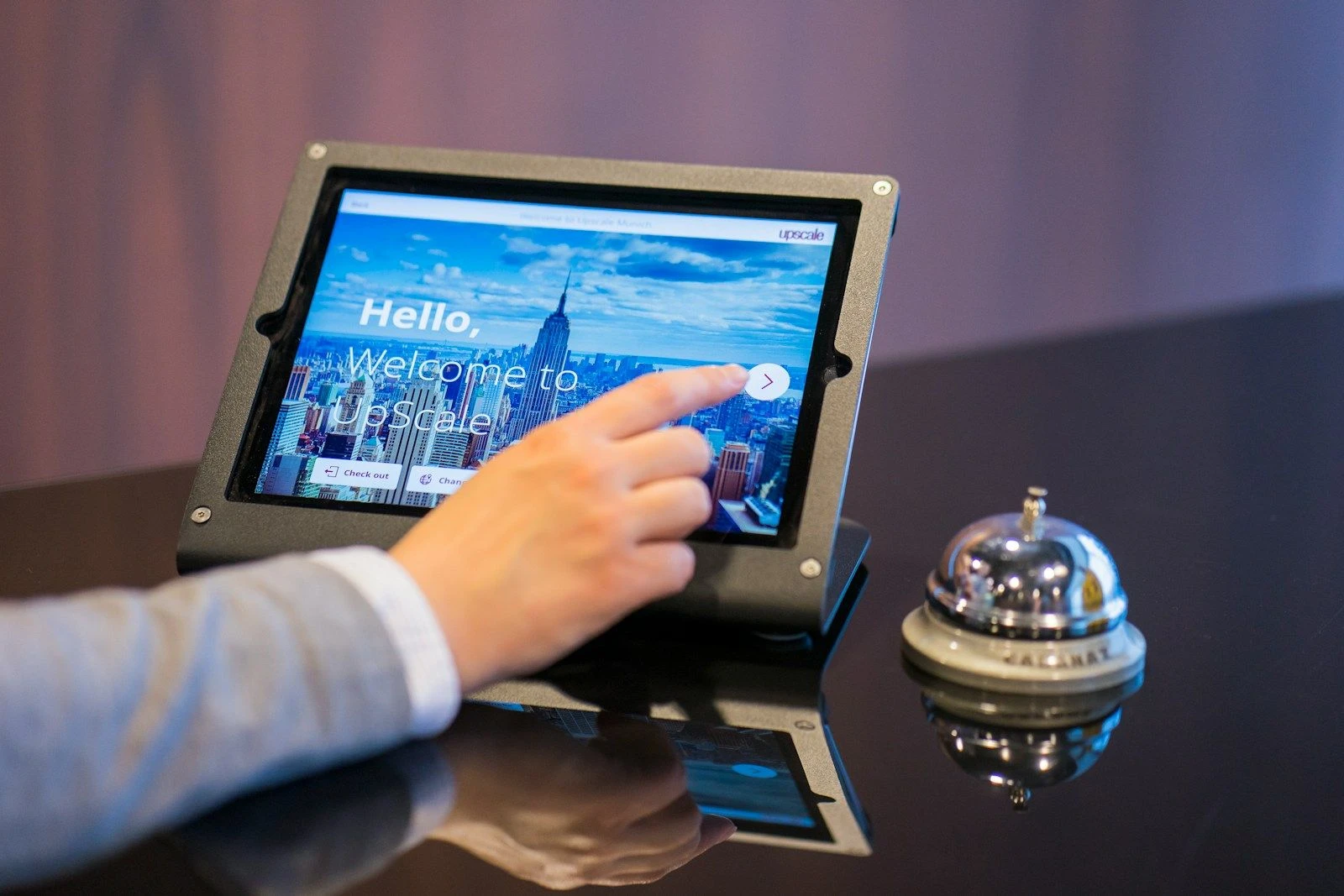
Language problems don't only happen at the front desk. They can show up at many points during a guest's stay, so it helps to know where to look.
| When it happens | What goes wrong | An easy fix |
|---|---|---|
| Check-in | The guest doesn't understand the rules, timings or Wi-Fi | Give a welcome card with pictures and timings |
| Inside the room | The guest can't call and explain what they need | Let them ask in writing, in their own language |
| Restaurant and room service | The guest can't read the menu, so they don't order | Show a menu with photos, in more than one language |
| Food needs | Nobody understands the guest's allergy or diet | Ask the guest to write it down, then repeat it back |
| Problems and complaints | The guest stays quiet and writes a bad review later | Make it easy to tell you about a problem without talking |
| Bill and checkout | The guest gets confused about the charges | Give a clear bill with every item listed |
If you look at the last column, you will see that most fixes don't need a new person. They only need clearer information that guests can see and read.
Multilanguage Guest Support Without Hiring Multilingual Staff
It would be great to have staff who speak many languages, but finding them is hard and it costs a lot. That's why most hotels use a mix of a few simple options. This is what bridging language gaps in hotels looks like in real life.
| Option | What it's good for | What it's not so good for |
|---|---|---|
| Staff who speak other languages | Warm and friendly talks with guests | They are hard to find and can't work every shift |
| Phone interpreter services | Serious or tricky talks | They take time to connect and cost money per call |
| Translation apps | Quick chats at the desk | They make mistakes with long or tricky sentences |
| Menus and request forms in many languages | Everyday food orders and requests | They can't replace a real conversation |
Some people call this "multilanguage customer support." For a hotel, it simply means helping every guest in the language they understand.
The smart way is to let tools handle the everyday things, like menus, forms and written cards. That way, your team has more time for the moments that really need a kind human, like a lost passport or an unhappy guest.
Which Languages Should Your Hotel Support?
You don't need to guess which languages to support. Your own guest records can tell you.
Look at where your foreign guests came from in the last 12 months, and write down the top countries. Most hotels find that three to five languages are enough to help most of their foreign guests, so start with those. India welcomed about 9.02 million foreign visitors in 2025, as per the Ministry of Tourism's early numbers, and they come from many different countries.
Also think about where your hotel is. A hotel near a famous temple may get very different guests than a beach resort or a hotel near the airport. Your guest list will always show you the truth.
Communicating With International Guests: Small Things That Help
Talking to guests is not only about words. A few small, kind habits make guests from other countries feel safe and welcome.
- Names:: In some countries, people say their family name first. If you're not sure what to call a guest, it's fine to ask them politely.
- Food:: Some guests eat only vegetarian, halal or kosher food, and some have allergies. Ask them, write it down, and tell the kitchen clearly.
- Greetings:: Some guests like a handshake, and some prefer a small nod. You can simply follow what the guest does.
- Patience:: A guest who looks confused is not being rude. They are trying their best, and a calm smile helps more than anything else.
You don't need to know about every country in the world. You only need to be kind and ask when you're not sure.
Don't Forget the Paperwork
There is one more thing to remember for hotels in India. When a foreign guest checks in, the property has to report their stay through Form C within 24 hours of arrival. The Government of India's Form C page explains who needs to do this. Check the guest's passport and visa details carefully, because a small language mix-up here can cause trouble later.
How Foodleplus Helps With Multi-Language Support
Foodleplus helps hotels, resorts, guest houses and other properties talk to guests in their own language. Here is how it works in three easy steps:
- The guest scans a QR code in their room and picks their language.
- The menu, service list and request forms all change to that language.
- Your staff see the guest's request on the dashboard in their own language.
The guest's language stays the same for their whole stay, so they only need to choose it once. Five guest languages come included, and more languages can be added if you ask. This means your team doesn't need to learn new languages, and your guests don't need to struggle.
If you want to see how it works, book a free demo and tell us which languages your guests speak the most. You can also read how contactless service in hotels makes guests feel more comfortable.
FAQs
How can hotels handle language barriers with foreign guests?
What is multilanguage guest support in hotels?
How do you talk to international guests who don't speak English?
Do hotels need multilingual staff to serve foreign guests?
Are translation apps good enough for hotel staff?
Which languages should a hotel in India support?
Related Posts
Hospitality
What Is FRRO Form C, and How Do Hotels Register Foreign Guests?
12 Nov 2026
Hospitality
Do Homestays Need a PMS? A Simple Guide for Guest Houses
11 Nov 2026
Hospitality
What Is a Banquet Event Order (BEO), and How Do You Write One?
13 Nov 2026