
Do Hotels Really Need a Guest App, or Is a QR Code Enough?
By Foodle+ Team • • 11 MINS READ
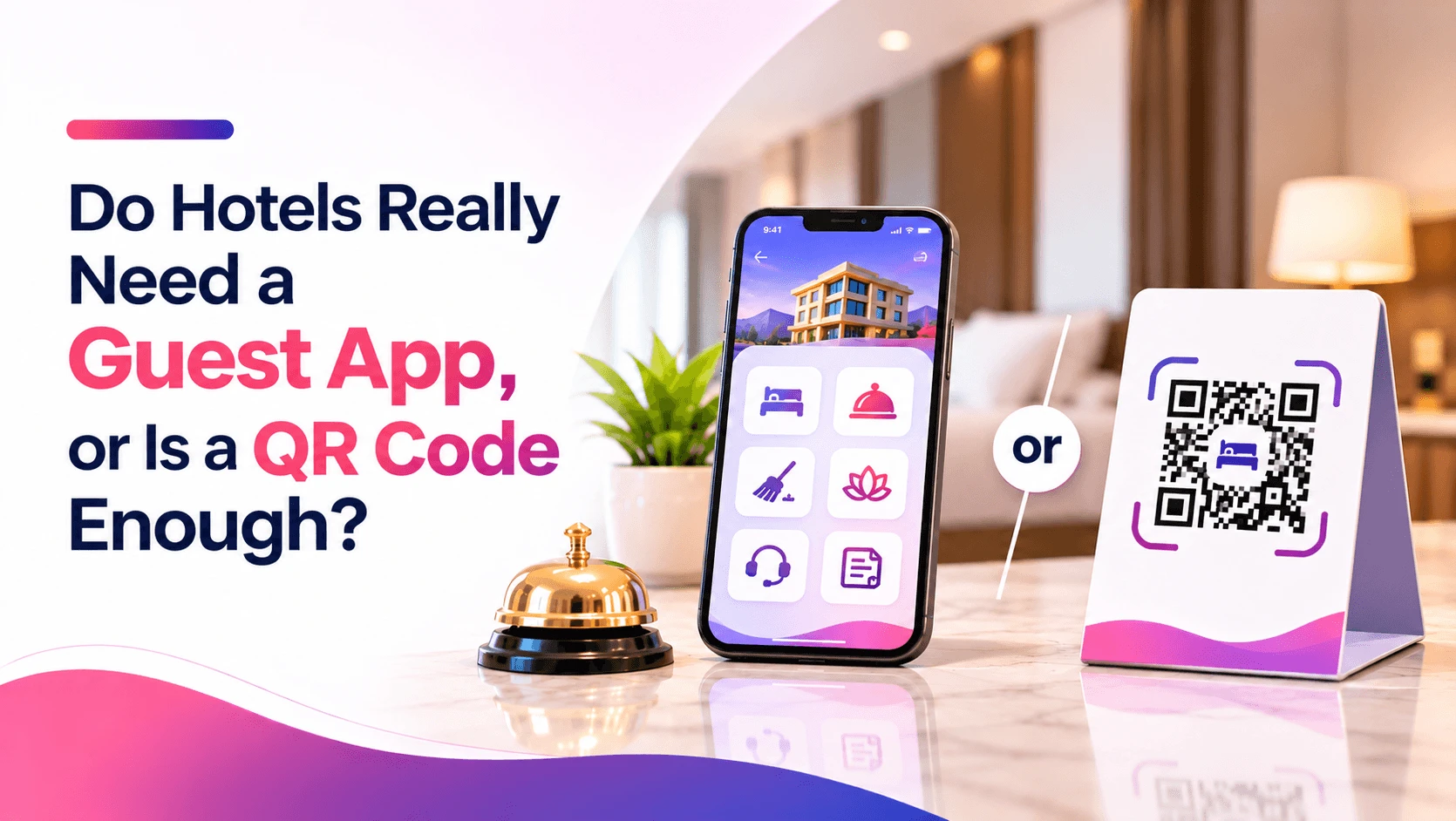
Quick answer: Most small and mid-size hotels do not need their own downloadable guest app. A QR code in the room that opens a simple page in the phone's browser can do the same in-stay jobs, such as showing the menu, hotel information and service options, without asking the guest to install anything. A hotel guest app makes more sense for hotel chains with a loyalty programme, digital room keys or many repeat guests.
That answer surprises many owners, because an app feels like the modern choice. Picture a 25-room hotel in Udaipur. The owner gets a quote to build a branded app for Android and iPhone, with a menu, room service, spa booking and a welcome message. The quote looks good, and so does the design. Then the owner asks one simple question: will a guest who is staying for two nights really go to the app store, download the app, create a login and wait for it to load, just to order tea?
For most guests, the honest answer is no. This guide explains why guests rarely download hotel apps, how a hotel guest app and a hotel QR code are different, when an app is still the right choice, and what a QR guest page should include so that guests actually use it.
- Do Hotels Really Need a Guest App?
- Why Don't Guests Download Hotel Apps?
- Hotel Guest App vs QR Code: What Is the Difference?
- When Does a Hotel Actually Need Its Own App?
- What Should a QR Guest Page Include?
- How Can a Hotel Make Sure Guests Actually Use the QR Code?
- So, Do Hotels Need a Guest App or a QR Code?
- Frequently Asked Questions
Do Hotels Really Need a Guest App?
Most independent hotels, boutique hotels, resorts and homestays do not need a downloadable app. What they need is a fast, simple way for guests to see information and ask for things from their own phone. A QR code that opens a web page does this well, because the guest only has to point the phone camera at the code.
An app becomes useful when guests come back again and again, and when the app gives them something they cannot get any other way. That usually means a hotel chain with a loyalty programme, mobile check-in or a digital room key.
| Type of property | Downloadable guest app | QR code guest page |
|---|---|---|
| Homestay or small hotel | Rarely worth it | Usually enough |
| Independent or boutique hotel | Rarely worth it | Usually enough |
| Resort with many services | Optional | Usually enough, and easy to start with |
| Hotel chain with loyalty programme | Often useful | Still useful for guests who do not download the app |
Why Don't Guests Download Hotel Apps?
Guests download apps they use every week, such as banking, food delivery and messaging apps. A hotel app is different, because the guest may use it for one or two nights and then never again.
The numbers show this clearly. In a 2017 J.D. Power study of more than 63,000 hotel guests in North America, only 19% of guests had downloaded a hotel app, while 70% of loyalty members had done so. The same study found that 38% of guests who had a hotel's app on their phone did not use it during their stay. The study is several years old, but the pattern still matches what hotels see today: loyal, frequent guests download apps, and everyone else does not.
Guests also prefer to talk to hotels on the channels they already use. In an eviivo survey of around 450 travellers, nearly 60% preferred SMS or WhatsApp for hotel communication, and only 4% chose a hotel app.
The common reasons guests skip a hotel app are simple:
- Short stays.: A guest staying for one or two nights does not want a new app for such a short time.
- First visits.: A guest who has never stayed before has no reason to trust or install the hotel's app.
- Phone storage and logins.: Many guests do not want another app, another account or another password.
- Weak mobile data.: Downloading an app on a slow connection, before the guest has the WiFi password, is frustrating.
- Effort.: Finding the app, installing it, opening it and signing in takes several steps for something that should take a few seconds.
Hotel Guest App vs QR Code: What Is the Difference?
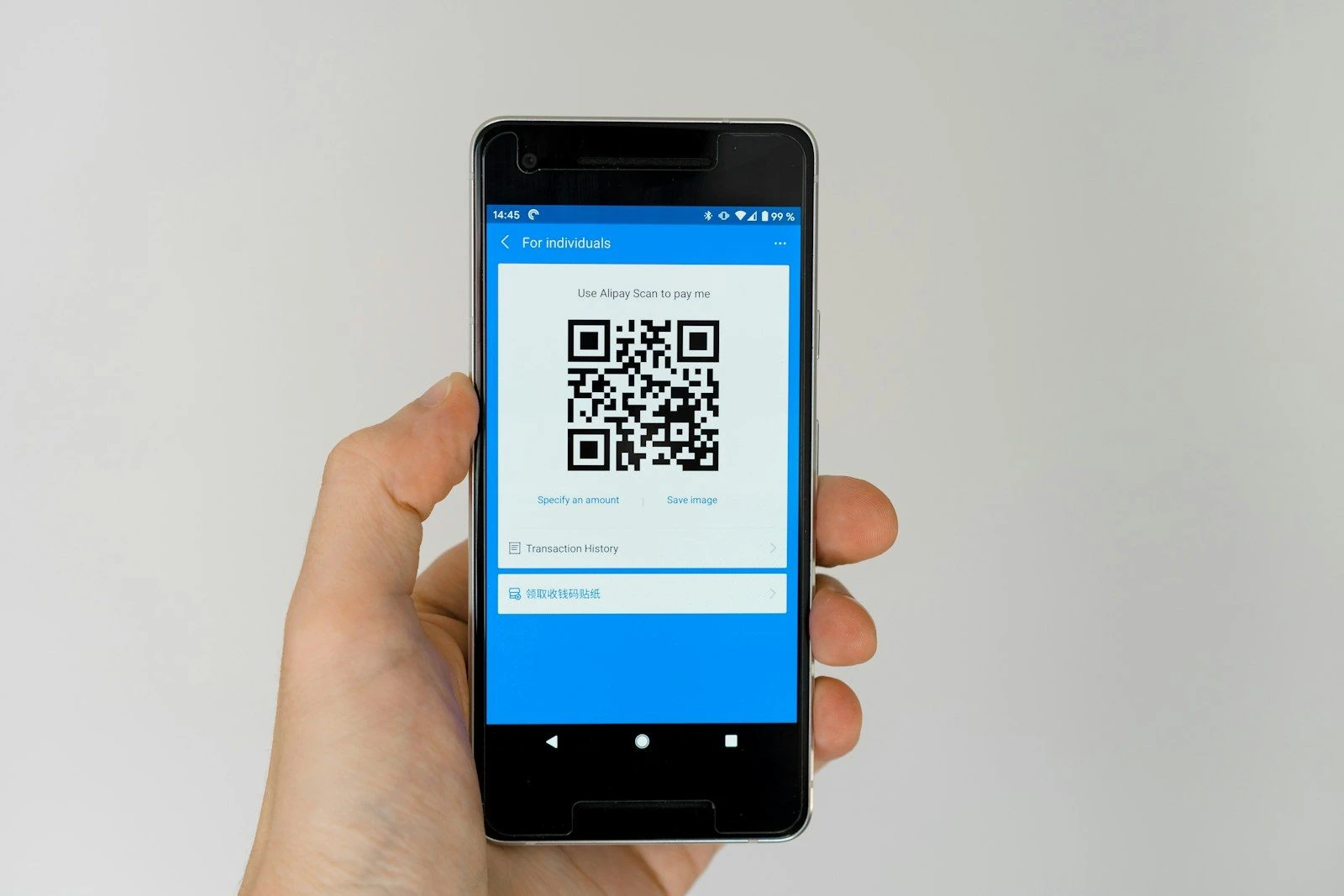
A hotel guest app is a program the guest downloads from the Google Play Store or the Apple App Store. A hotel QR code, in this case, is a printed code in the room that opens a web page in the phone's browser. Both can show the same content, but they work very differently for the guest and for the hotel.
| Point | Downloadable guest app | QR code guest page |
|---|---|---|
| What the guest does | Finds the app, downloads it, signs in | Points the camera at the code |
| Time to first use | A few minutes | A few seconds |
| How many guests use it | Mostly loyal and repeat guests | Any guest with a smartphone |
| Works on any phone | Needs separate Android and iPhone versions | Works in any modern phone browser |
| Updating the menu or hours | May need an app update | Changes show on the page straight away |
| Cost to build and run | Higher, with ongoing updates for both phone systems | Lower, as part of the hotel's software |
| Best for | Loyalty, digital keys, frequent repeat guests | In-stay menus, information and requests |
Hotel apps also need constant care after launch. Canary Technologies points out that hotels must build separate apps for iOS and Android and keep updating them as phones and operating systems change. A QR guest page runs in the browser, so the hotel updates it once and every guest sees the same version.
When Does a Hotel Actually Need Its Own App?
A downloadable app is not a bad idea in every case. It is simply the wrong first step for most smaller properties. A hotel guest app makes sense when most of these points are true:
- The hotel is part of a chain: , so the same app works across many properties.
- There is a loyalty programme: that guests use to earn and spend points.
- Guests come back often: , such as business travellers who stay several times a year.
- The app offers something a web page cannot: , such as a digital room key that unlocks the door.
- The hotel has a budget and a team: to keep the app updated for years, not just to launch it.
Even then, a hotel with an app should still keep a QR guest page for guests who do not download it. A guest who arrives late after an OTA booking should be able to find the WiFi password, the breakfast timing and the room service menu without installing anything.
What Should a QR Guest Page Include?
A QR code only works if the page it opens is useful. A page that loads slowly, looks like a printed PDF or has old information will make guests stop scanning. A good QR guest page should include:
- The menu for room service and the restaurant: , with clear prices and photos where possible.
- Service requests: , such as laundry, extra towels or help, so the guest does not have to call the desk.
- Hotel information: , such as WiFi details, breakfast and checkout timings, the pool and spa hours, and house rules.
- A language choice: , so guests from other states or countries can read the page in a language they understand.
- A feedback option: , so guests can raise a problem during the stay instead of in a review after they leave.
- The front desk phone number: , for guests who still prefer to call.
Hotels that want to know more about ordering through a QR code can read about the advantages of QR code ordering for hotels and why guests prefer QR ordering over waiting for staff.
With Foodleplus, guests do not need any app. They scan the QR code in their room, the page opens in their phone browser, and they can choose their language. Menus and request forms then show in that language, and requests such as laundry or help appear on the staff dashboard. Hotels can learn more about the multi-language guest support feature.
How Can a Hotel Make Sure Guests Actually Use the QR Code?

Putting a QR code in the room is only half the job. Guests also need to notice it, trust it and be able to open it. These simple steps help:
- Place the code where guests look: , such as the bedside table, the desk or near the TV, not hidden in a drawer.
- Add one clear line of text: , such as "Scan to see the menu and request services. No app needed."
- Print the WiFi details next to the code: , so guests with no mobile data can still open the page.
- Mention it at check-in.: One sentence from the front desk staff makes a big difference.
- Keep the page up to date.: If the kitchen closes at 11 pm, the page should say so.
- Check the codes regularly.: Make sure no one has stuck a different code on top of the real one, and print the hotel's name on each card so guests know it is genuine.
- Keep the phone option.: Some older guests or guests with weak eyesight will still prefer to call, and that is fine.
So, Do Hotels Need a Guest App or a QR Code?
For most small and mid-size hotels in India, a QR code is enough, and it is usually the better choice. It works for every guest with a smartphone, it costs less to run, and it can be updated the same day the menu or timings change. A downloadable app is worth building only when the hotel has a loyalty programme, a digital key or a large number of repeat guests who will open it again and again.
The best approach is to start with a good QR guest page, check how many guests use it, and only then decide whether an app would add anything more. Hotels that want to see how much in-stay revenue they could gain from easier ordering and requests can start with a free revenue audit.
FAQs
Do hotels need a guest app?
Do hotel guests actually download hotel apps?
Is a QR code better than a hotel guest app?
Can a hotel use both a guest app and a QR code?
Do guests need mobile data to use a hotel QR code?
Are hotel QR codes safe for guests?
Related Posts

Hospitality
How Can Hotels Handle Language Barriers With Foreign Guests?
12 Nov 2026
Hospitality
What Is FRRO Form C, and How Do Hotels Register Foreign Guests?
12 Nov 2026
Hospitality
Do Homestays Need a PMS? A Simple Guide for Guest Houses
11 Nov 2026