
What Is a Guest Journey in a Hotel, and Which Touchpoints Matter Most?
By Foodle+ Team • • 9 MINS READ

Quick answer: A hotel guest journey is every step a guest goes through with a hotel, from the moment they look for a room to the review they leave after going home. It has five stages: booking, arrival, the stay, departure and after the stay. Each stage has touchpoints, the moments when the guest deals with the hotel. The touchpoints that matter most are check-in, getting help during the stay, food and service, fixing problems quickly and a clean, correct bill at check-out.
Think about the last guest who left your hotel unhappy. Was it really the room? Or was it the 20-minute wait at check-in, the towel request that nobody brought, or a surprise charge on the bill?
Most of the time, guests do not remember the whole stay. They remember a few moments, the good ones and the bad ones. Those moments are the touchpoints in the hotel guest journey.
The good news is that you can see them coming. Below, you will see the five stages of the guest journey, the touchpoints in each one, which ones matter most, and a simple way to map your own hotel's journey on one page.
What Is a Hotel Guest Journey?
A hotel guest journey is the full path a guest takes with a hotel. It starts before the booking and ends after the guest goes home. When a hotel draws this path on paper, it is called a hotel customer journey map.
Hotel schools teach the same idea as the guest cycle in hotel operations. The classic guest cycle has four stages: pre-arrival, arrival, occupancy (the stay) and departure. The guest journey adds one more stage at the end, after the stay, because reviews and repeat bookings happen there.
A touchpoint is any moment when the guest deals with the hotel. That can be a person, like the receptionist, or a thing, like the booking page, the room or the bill.
Why does this matter? Because one bad touchpoint can spoil a good stay. In J.D. Power's 2025 study of hotel guests in North America, guest satisfaction fell from 677 to 460 points (on a 1,000-point scale) when guests had a problem during their stay. (Source)
What Are the Stages of the Hotel Guest Journey?
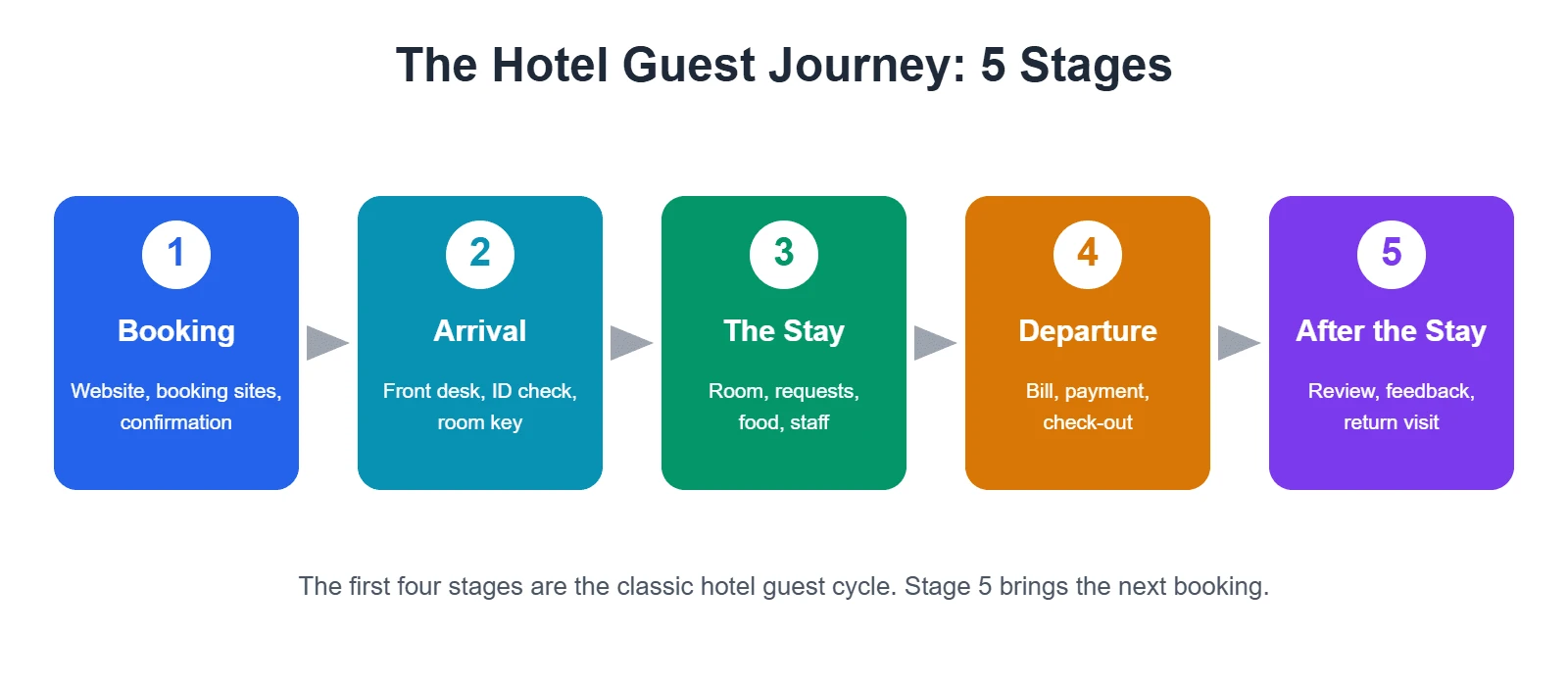
The guest journey has five stages. Here is the whole journey in one line:
Booking → Arrival → The stay → Departure → After the stay
And here is what happens at each stage:
| Stage | What the guest does | Main touchpoints | What the guest wants |
|---|---|---|---|
| 1. Booking (pre-arrival) | Searches, compares, books, waits for the trip | Website, booking sites, phone, confirmation message | Clear prices, quick replies, a booking they trust |
| 2. Arrival | Reaches the hotel and checks in | Parking or entrance, front desk, ID check, room key | A short wait and a warm welcome |
| 3. The stay | Uses the room and the hotel | Room, housekeeping, requests, restaurant, room service, Wi-Fi, staff | Things that work, and quick help when they do not |
| 4. Departure | Checks out and pays | Bill, payment, check-out desk, luggage help | A correct bill with no surprises, and a fast exit |
| 5. After the stay | Remembers, reviews, maybe returns | Review sites, thank-you message, feedback form, offers | To feel heard, and a reason to come back |
The first four stages match the classic hotel guest cycle. The fifth stage is where the next booking comes from.
Which Touchpoints Matter Most in the Guest Journey?
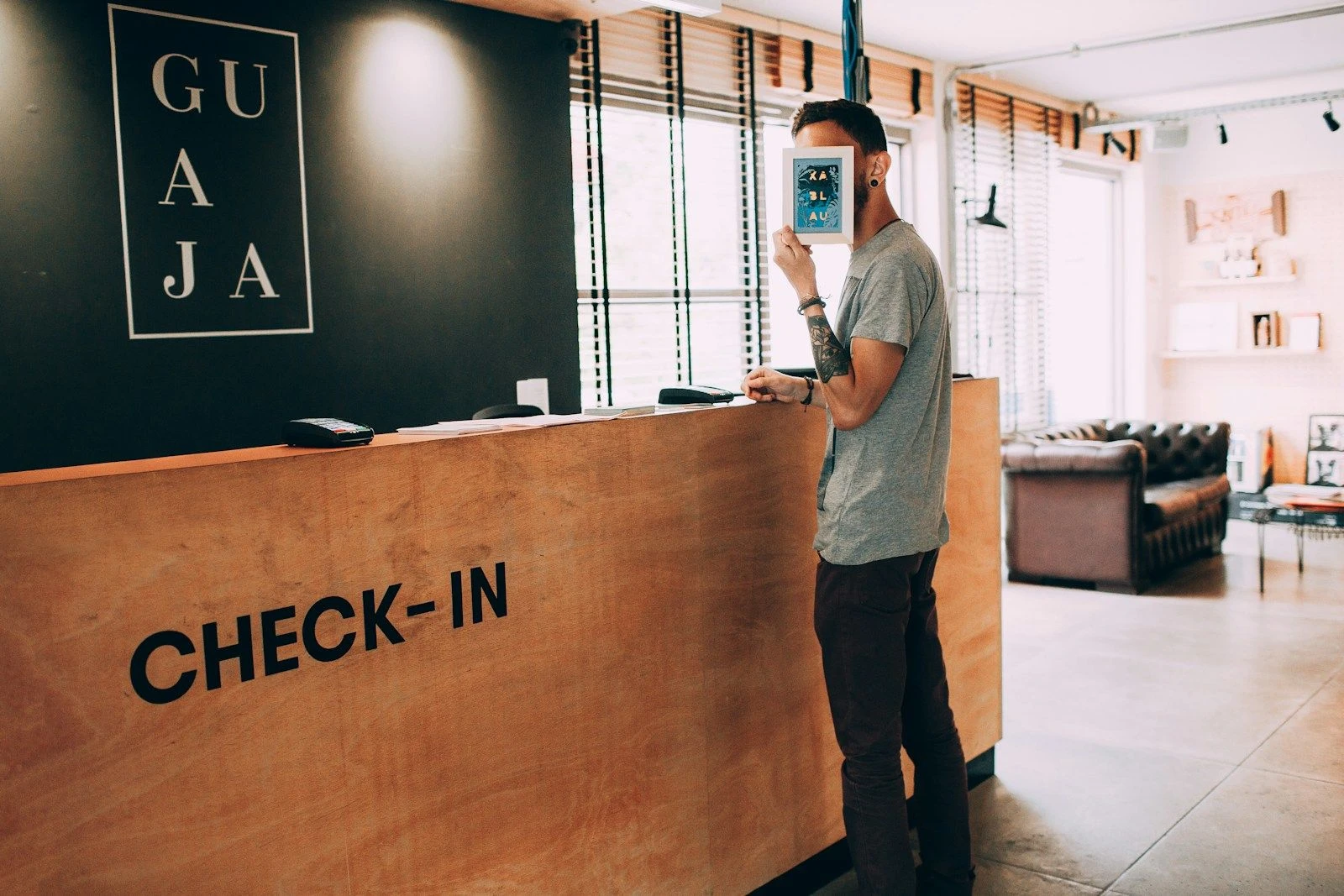
Every touchpoint counts, but a few have a much bigger effect on how guests feel and what they write in reviews.
1. Check-in. It is the first real meeting with the hotel, and a slow one sets a bad mood for the whole stay. In a 2025 analysis of 1.1 million hotel reviews, Customer Alliance found that 20% of reviews mentioned check-in as a major pain point. (Source) An Ipsos survey of 1,169 German hotel guests in 2025 found that 42.2% were frustrated by long check-in lines and 31.9% by paperwork. (Source)
2. The first hour in the room. Is the room clean, cool and as booked? Does the Wi-Fi work? A problem here colours everything that comes after.
3. Getting help during the stay. Extra towels, a broken tap, a late check-out request. Guests judge the hotel by how quickly and easily they can ask, and how fast someone comes.
4. Staff. People matter more than any machine. The same Customer Alliance analysis found that staff appear in roughly one in three reviews, and most of those mentions are positive. (Source)
5. Food and service. Breakfast, room service and the restaurant are daily touchpoints. Slow or wrong orders are noticed quickly.
6. Fixing problems. Things will go wrong. A quick, polite fix can turn a complaint into a good review. A slow or rude one does the opposite.
7. The bill at check-out. A wrong or surprise charge is often the last thing a guest remembers. In the same Ipsos survey, 29.0% of guests were frustrated by delayed check-outs. (Source)
How Do You Map Your Hotel's Guest Journey?
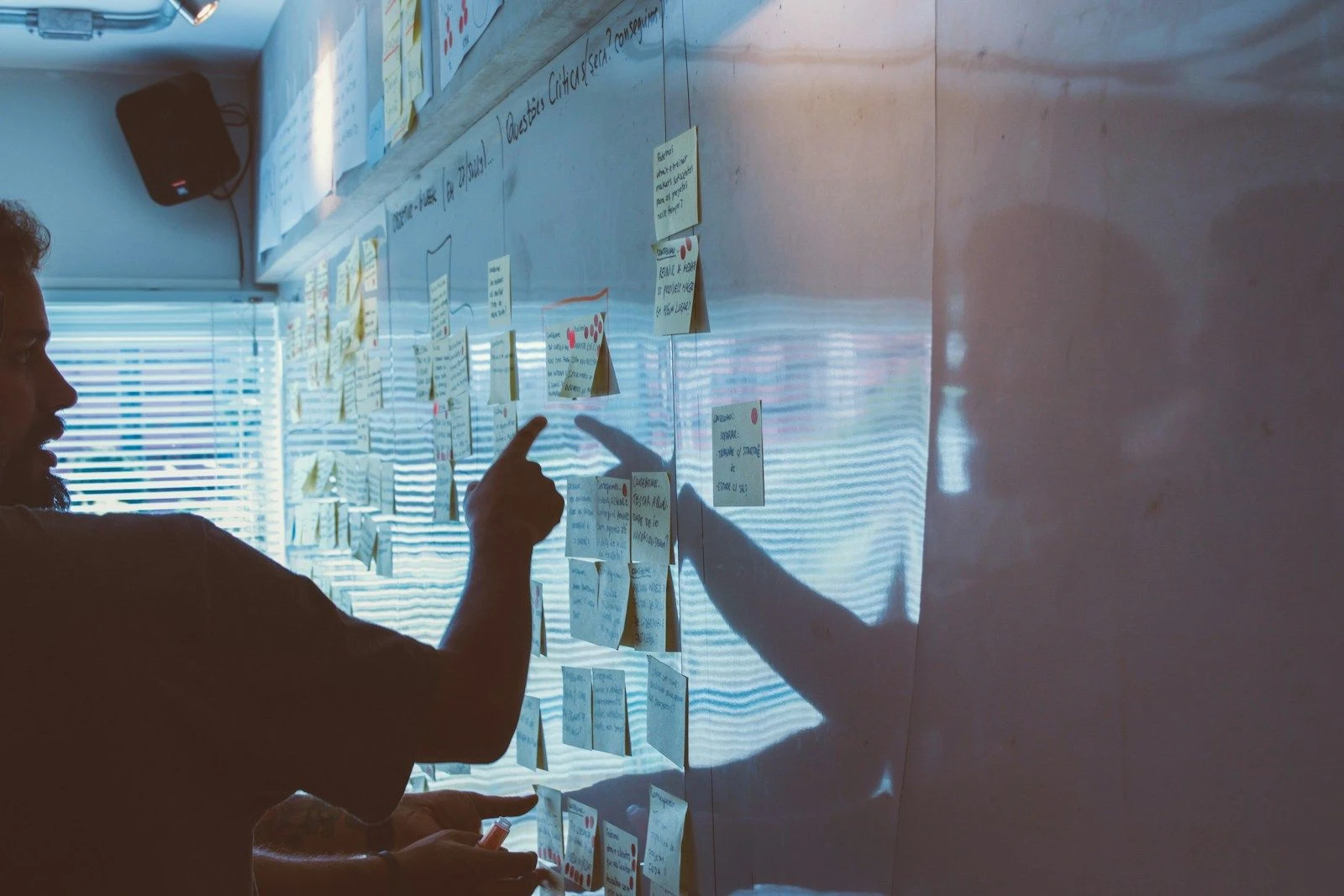
Guest journey mapping means writing down each stage and touchpoint for your own hotel, then marking where guests are happy and where they get stuck. It takes one meeting and one sheet of paper.
- Get the team together.: Bring someone from the front desk, housekeeping, the restaurant and management. Each sees a different part of the journey.
- Write the five stages across the top.: Booking, arrival, the stay, departure, after the stay.
- List every touchpoint under each stage.: Include small ones, like the parking sign or the Wi-Fi password card.
- Read the last 50 reviews.: Mark which touchpoint each complaint and each compliment is about.
- Mark each touchpoint green, yellow or red.: Green is working well. Yellow is okay. Red is causing complaints.
- Pick the top three red touchpoints.: Fix those first. Do not try to fix everything at once.
- Check again in 30 days.: Read new reviews and see if the red touchpoints have turned yellow or green.
Here is a simple hotel guest journey mapping template a GM can copy:
| Stage | Touchpoint | Who owns it | What goes wrong today | Colour | Fix this month |
|---|---|---|---|---|---|
| Arrival | Front desk check-in | Front office manager | Guests wait 15 minutes at peak hours | Red | Add one more person at the desk from 12 to 2 pm |
| The stay | Towel and amenity requests | Housekeeping head | Requests by phone get forgotten | Red | Log every request in one place and check it each hour |
| The stay | Room service | F&B manager | Orders take 45 minutes at night | Yellow | Shorter late-night menu |
| Departure | Final bill | Front office manager | Restaurant charges missing from the bill | Red | Match restaurant bills with room bills every shift |
For ideas on making each stage feel more personal, see this guide on how hotels can personalize every guest stay.
Where Do Guests Feel the Most Frustration?
These are the pain points that show up again and again in each stage:
- Booking:: slow replies to questions, prices that change at the last step, no confirmation message.
- Arrival:: long queues, rooms not ready at check-in time, too much paperwork.
- The stay:: requests that are forgotten, slow room service, Wi-Fi that does not work, not knowing what the hotel offers.
- Departure:: wrong charges on the bill, slow check-out, missing restaurant bills added at the last minute.
- After the stay:: no thank-you, no reply to reviews, no reason to come back.
Notice the pattern. Most frustration comes from waiting and from things being forgotten, not from the room itself.
How Does Guest Journey Software Help?
Guest journey software, or hotel guest journey software, is any tool that helps a hotel manage touchpoints across the journey, so that fewer things are forgotten and guests get help faster.
The stay is the stage with the most touchpoints, so it is where software helps most:
- Requests in one place.: Instead of phone calls and paper notes, guest requests appear on one dashboard that staff can see and close.
- Ordering from the room.: Guests scan a QR code in the room and order food or ask for services from their phone browser, with no app to download.
- Help in their own language.: Guests can use the menu and request screens in the language they are comfortable with.
- Bills that match.: Restaurant and room service bills go onto the room bill, so check-out has no surprises.
Software does not replace good staff. It gives them fewer things to remember and more time for the guest in front of them.
Conclusion
The hotel guest journey has five stages: booking, arrival, the stay, departure and after the stay. Guests remember a handful of touchpoints, mainly check-in, getting help during the stay, staff, food, how problems are fixed and the final bill. Map your own journey on one page, mark the red touchpoints, and fix the top three first. Small fixes in the right places change how guests feel about the whole stay.
FAQs
What is a guest journey in a hotel?
What are the stages of the hotel guest journey?
What is the guest cycle in a hotel?
Which touchpoints matter most in a hotel?
What is guest journey mapping?
Related Posts

Hospitality
How Can Hotels Handle Language Barriers With Foreign Guests?
12 Nov 2026

Hospitality
What Is FRRO Form C, and How Do Hotels Register Foreign Guests?
12 Nov 2026

Hospitality
Do Homestays Need a PMS? A Simple Guide for Guest Houses
11 Nov 2026