
Hotel Linen Management: How to Run a Linen Room and Stop Linen Loss
By Foodle+ Team • • 16 MINS READ
Quick answer: Hotel linen management means knowing how much linen the hotel owns, where every piece is, and how much goes missing each month. To do it well, a hotel should list every linen item, set a par level, run the linen room with a one-for-one exchange, track every bag that goes to the laundry, count all linen once a month, and control toiletries in the same way.
That sounds like a lot of work, but most of it is simple habit, and a small story shows why it matters. A 30-room hotel in Nainital was full on a long weekend. By noon on Saturday, the housekeeping team had run out of bath towels, because the laundry van was late and there was no spare stock on the shelf. The staff borrowed towels from the pool area, then from the staff room, and two rooms were still given to guests with only hand towels.
Nobody had stolen anything that day. The hotel simply did not know how many towels it had, how many were at the laundry, or how many it really needed. Good hotel linen management fixes exactly this problem. This how-to guide explains what a linen room in a hotel does, how to set par levels with a simple example, how to stop linen going missing, and how to control toiletries and guest supplies with the same method.
What Is Hotel Linen Management?
Hotel linen management is the system a hotel uses to buy, store, issue, wash, count and replace its linen. Linen includes bed sheets, pillow covers, duvet covers, blankets, bath towels, hand towels, bath mats, bathrobes, restaurant napkins, tablecloths and pool towels.
Linen is one of the few things in a hotel that moves all day. It goes from the store to the floor, from the room to the laundry, and from the laundry back to the shelf. Every time it moves, a piece can be lost, damaged or counted wrongly. Good linen management keeps a record of each move, so the hotel always knows what it has.
What Is a Linen Room in a Hotel?
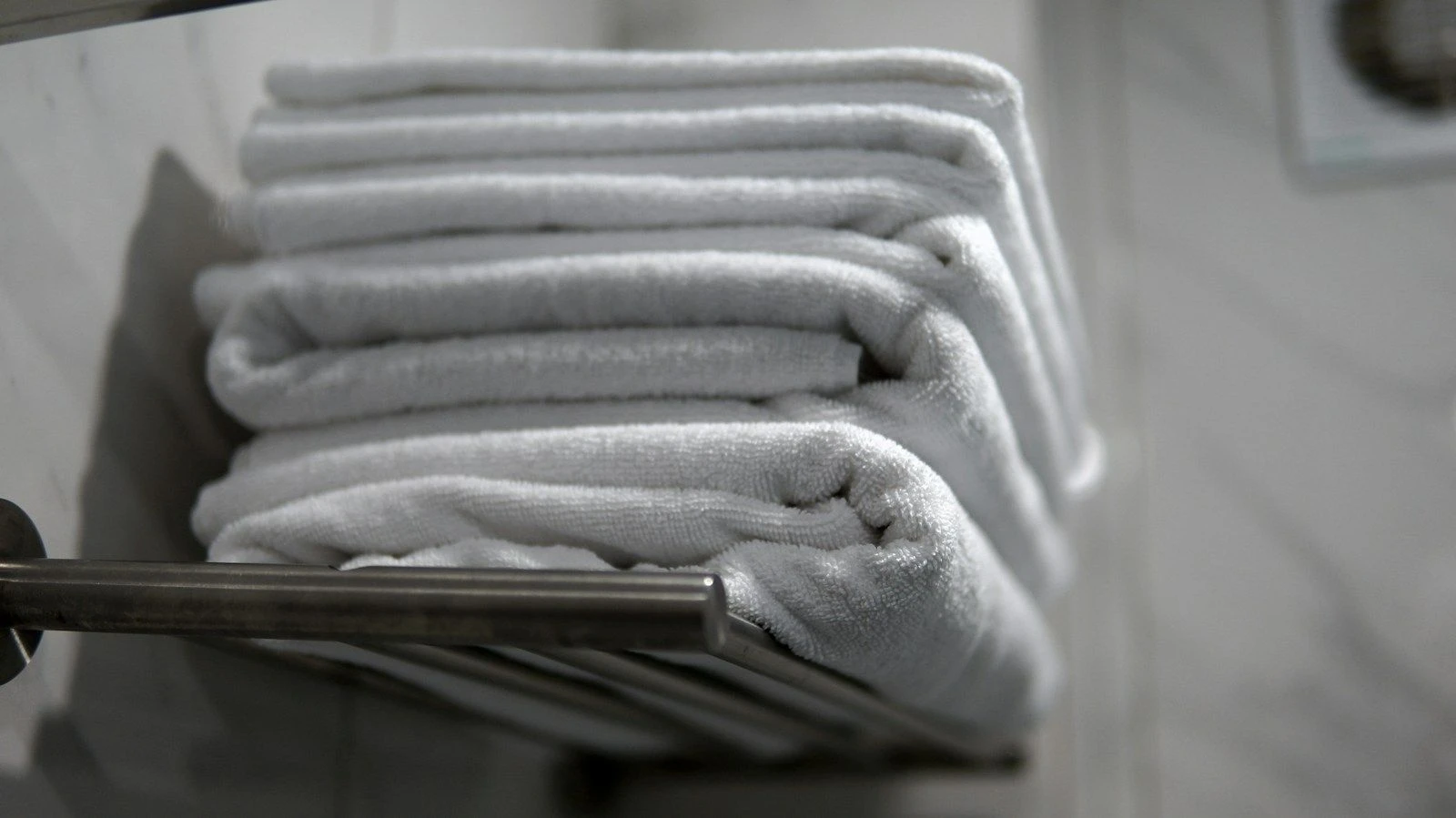
A linen room in a hotel is the place where clean linen is stored, issued to staff, and received back from the laundry. It is usually run by the housekeeping department, and it works like a small bank for linen. Nothing should go in or out without a count.
The main jobs of the linen room are:
- Storing clean linen: on labelled shelves, sorted by type and size.
- Issuing linen: to room attendants, the restaurant and the pool or spa.
- Collecting soiled linen: from floors and outlets.
- Sending linen to the laundry: and receiving it back.
- Checking linen: for stains, holes and wear before it goes back on the shelf.
- Keeping records: of every issue, return, loss and write-off.
Bigger hotels often have one main linen room and a small linen store on each floor, called a floor pantry. Smaller hotels usually have one linen room for the whole property. Both work well, as long as every movement is counted.
How to Manage Linen in a Hotel: Step by Step
The steps below work for a 15-room guest house and a 150-room hotel. A small property can run them with a register, and a larger one can use a sheet or software.
Step 1: List Every Linen Item and How Many Each Room Needs
Start by writing down every type of linen the hotel uses. Then write down how many pieces of each item one room needs for one full change. A standard double room might need one bed sheet, one duvet cover, four pillow covers, two bath towels, two hand towels and one bath mat.
Do the same for the restaurant, banquet hall, pool and spa. A restaurant might need a tablecloth and four napkins per table. This list is the base for everything else, so it should be correct and complete.
Step 2: Set the Par Level
Par level is the number of full sets of linen the hotel keeps for each room. The common rule is 3 par. That means one set is in the room, one set is at the laundry, and one set is clean on the shelf.
The formula is simple:
Total pieces needed = Pieces per room × Number of rooms × Par level
One industry guide shows that a 100-room hotel with 4 bath towels per room at 3 par needs 1,200 bath towels. The same guide notes that a hotel that sends its laundry outside may need 4 or 5 par, because linen spends more time travelling to and from the laundry.
Here is a worked example for a 20-room hotel that uses an outside laundry and keeps 4 par:
| Item | Pieces per room | Rooms | Par level | Total needed |
|---|---|---|---|---|
| Bed sheets | 1 | 20 | 4 | 80 |
| Duvet covers | 1 | 20 | 4 | 80 |
| Pillow covers | 4 | 20 | 4 | 320 |
| Bath towels | 2 | 20 | 4 | 160 |
| Hand towels | 2 | 20 | 4 | 160 |
| Bath mats | 1 | 20 | 4 | 80 |
A hotel with its own laundry and a quick turnaround can usually work with 3 par. A hotel that is often full, or that has a slow laundry, should keep a higher par so it never runs short on a busy day.
Step 3: Set Up the Linen Room Properly
A linen room works best when it is clean, dry, locked and well organised. Damp air spoils linen, and an open door makes it easy for pieces to disappear.
- Keep the room dry and airy, away from the kitchen so linen does not pick up smoke or food smells.
- Use labelled shelves for each item and size, such as "Double bed sheet" or "Bath towel".
- Stack clean linen with the newest pieces at the bottom, so older pieces are used first.
- Keep the room locked, and give the key only to the linen room attendant and the housekeeping supervisor.
- Keep soiled linen in a separate area, never next to clean stock.
- Fix opening hours, so staff know when they can collect and return linen.
Step 4: Issue Linen One for One
The easiest way to stop linen loss inside the hotel is a one-for-one exchange. A room attendant hands in one soiled bath towel and receives one clean bath towel. The linen room writes down the count, and both people sign.
This rule should apply to every department:
- Housekeeping exchanges room linen at the start of each shift.
- The restaurant exchanges napkins and tablecloths, counted in bundles of ten.
- The pool or spa exchanges towels against a towel card or room number.
- Staff uniforms and staff towels are issued against a staff ID.
Many hotels also use a different colour for pool towels, so they are easy to spot if they end up in guest rooms or leave the property.
Step 5: Track Every Bag That Goes to the Laundry
Linen often goes missing between the hotel and the laundry, especially when the laundry is outside. Every bag that leaves should have a count, and every bag that comes back should be counted again.
- Write a laundry slip for every batch, with the item, the count, the date and a signature.
- Count the linen again when it comes back, before it goes on the shelf.
- Note any piece that comes back stained, torn or not at all.
- Keep a separate count of items sent for rewash, which means linen that came back dirty or stained and must be washed again.
- Check the laundry bill against the slips at the end of the month.
If the same items keep coming back short from the same laundry, the slips give the hotel clear proof to discuss with the laundry.
Step 6: Count All Linen Once a Month
A full count shows how much linen the hotel really has. It should happen on the same date every month, so the numbers can be compared.
- Count linen in every place: the linen room, floor pantries, room attendant trolleys, guest rooms, the laundry and the restaurant.
- Use the same count sheet every time.
- Compare the count with the par level and with last month's count.
- Write down every piece that was thrown away and why.
- Count high-value or high-loss items, such as bathrobes and pool towels, every week.
The difference between what the hotel should have and what it actually counted is the linen loss for the month. That number is the most useful figure in linen management.
Step 7: Control Toiletries and Guest Supplies the Same Way
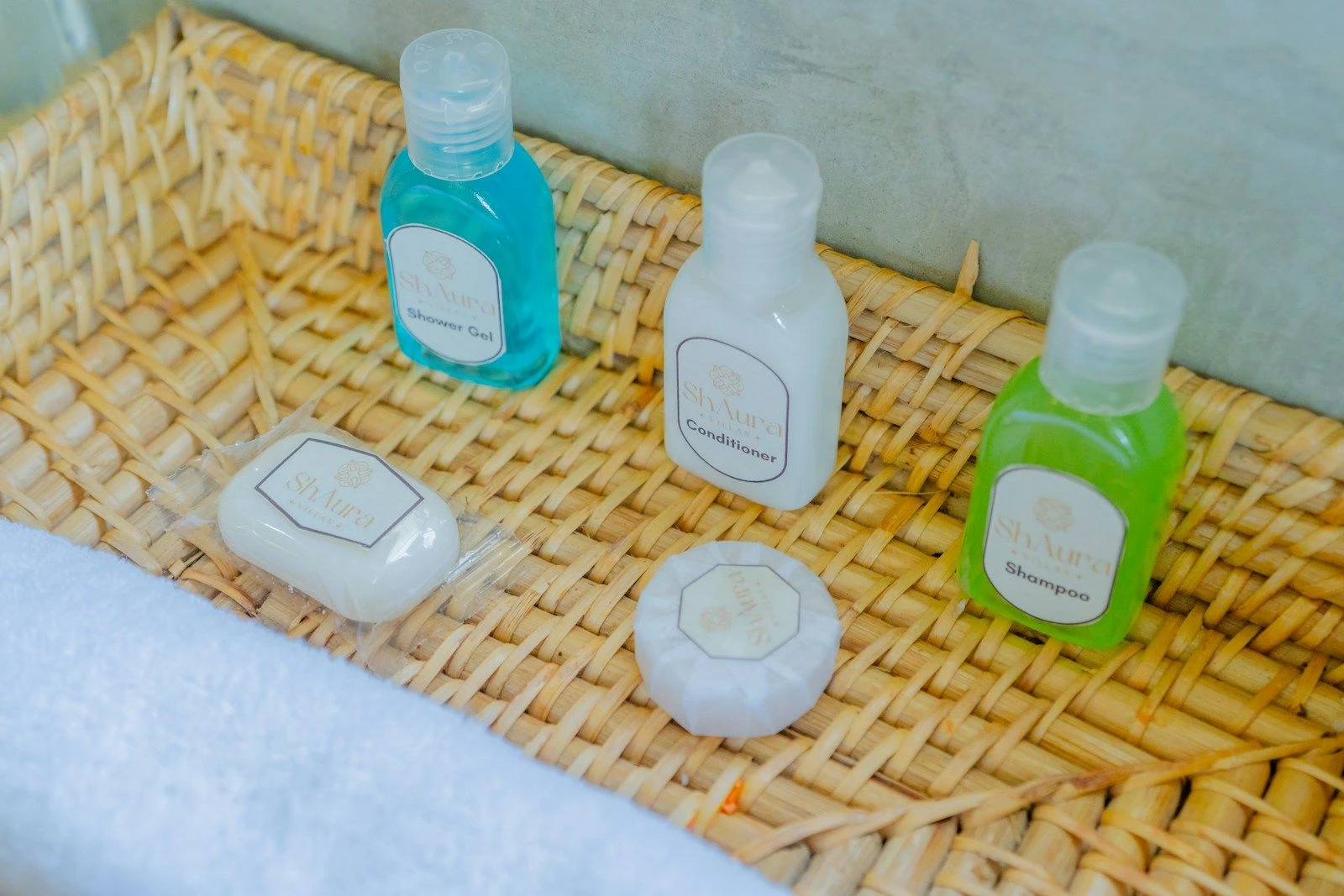
Toiletries and guest supplies need the same care as linen, because they also disappear quickly. A January 2026 survey found that 53% of hotel staff said guests often take toiletries, such as soap, shampoo and tissues.
Guest supplies include soap, shampoo, toothbrush kits, combs, shower caps, slippers, tissues, toilet rolls, tea, coffee, sugar and water bottles. To control them:
- Fix a standard for each room.: For example, two soaps, two shampoos and one toilet roll per stay.
- Set a stock level for the store.: Work out daily use, then keep enough for a set number of days. A 20-room hotel at 80% occupancy has 16 rooms in use. If each room uses two soaps a day, the hotel needs 32 soaps a day, or about 224 for a week, plus a small buffer.
- Stock the trolley to a fixed list.: Each room attendant starts the shift with the same quantities, and the supervisor checks what is left at the end.
- Issue store stock only against a signed request.
- Compare use with occupancy.: If soap use goes up while occupancy stays the same, something needs checking.
Hotels that also want to track their store stock in software can look at the store inventory management in the Foodleplus POS.
Step 8: Retire Old Linen and Reuse It
Linen does not last forever. Sheets and towels wear thin, fade and pick up stains that do not wash out. A simple grading system helps the hotel get full value from every piece.
- Grade A:: good condition, used in guest rooms.
- Grade B:: slightly worn or faded, used in staff rooms or for back-of-house use.
- Grade C:: worn out, cut into cleaning cloths.
Every piece that is moved down a grade or thrown away should be written down with a reason. This stops "missing" linen from hiding behind "it was old anyway."
Where Does Hotel Linen Go Missing?
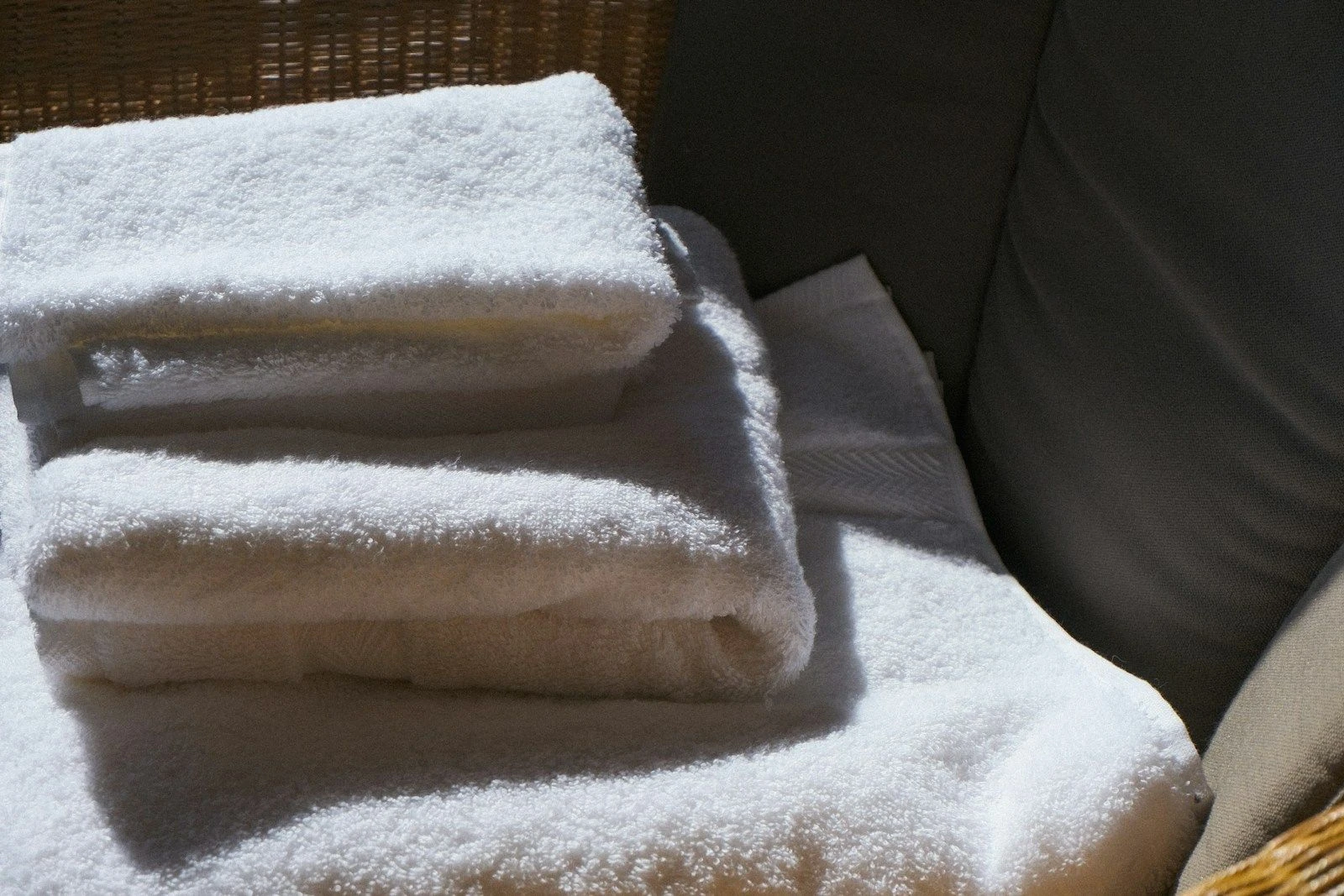
Linen goes missing in more places than most owners think. Guests do take some items. A January 2026 survey of 1,239 hotel staff and owners found that 88% had seen towels disappear or heard about them being stolen. However, theft by guests is only one cause.
| Where it goes | What usually happens | What helps |
|---|---|---|
| Laundry | Short returns or mixed-up linen from other hotels | Count every bag out and in |
| Damage | Stains, burns and tears that are thrown away without a record | Write off every piece with a reason |
| Staff use | Towels and sheets used for cleaning or taken home | One-for-one exchange and Grade C cloths for cleaning |
| Pool and spa | Towels carried to rooms or taken away | Different colour and a towel card |
| Guests | Towels, bathrobes and toiletries packed into bags | Clear room standards and a polite note in the room |
| Counting mistakes | Linen counted twice or not at all | One count sheet and one count date |
There is also no single "normal" loss figure that every hotel can use. One industry report says that there is no reliable global benchmark for how much inventory guests take, and suggests that each hotel set its own baseline. That is why the monthly count matters so much.
What Should a Hotel Track Every Month?
Three simple numbers show whether linen management is working. Each one can be worked out with a calculator.
| Number | How to work it out | What it tells the hotel |
|---|---|---|
| Linen loss % | Missing pieces ÷ (Opening count + New pieces bought) × 100 | How much linen disappeared this month |
| Linen cost per occupied room | (Linen bought + Laundry bill) ÷ Rooms sold in the month | How much linen costs for each room sold |
| Rewash rate | Pieces sent for rewash ÷ Pieces washed × 100 | How well the laundry is cleaning |
Missing pieces are the pieces the hotel should have, minus the pieces it counted and minus the pieces it wrote off with a reason. Watch these numbers for three or four months before setting a target. A sudden jump in any of them is the signal to look closer.
Free Linen Count Template
Hotels can copy this template for the monthly count. The first table explains what goes in each column, and the second table shows a filled example for the 20-room hotel used earlier in this guide.
What to write in each column
| Column | What to write |
|---|---|
| Item | The name of the linen item, such as bath towels or pillow covers. |
| Par needed | The total pieces the hotel should own, worked out in Step 2. |
| Linen room | Clean pieces counted on the linen room shelves. |
| Floors and trolleys | Pieces counted in floor pantries and on room attendant trolleys. |
| Rooms | Pieces counted inside guest rooms, both in use and set up for the next guest. |
| Laundry | Pieces sent to the laundry that have not come back yet, taken from the laundry slips. |
| Total counted | Linen room + Floors and trolleys + Rooms + Laundry. |
| Written off | Pieces thrown away or moved to staff or cleaning use this month, each with a written reason. |
| Missing | Par needed − Total counted − Written off. These are the pieces nobody can find. |
Filled example: 20-room hotel at 4 par
Count date: 30 November Counted by: Linen room attendant Checked by: Housekeeping supervisor
| Item | Par needed | Linen room | Floors and trolleys | Rooms | Laundry | Total counted | Written off | Missing |
|---|---|---|---|---|---|---|---|---|
| Bed sheets | 80 | 26 | 10 | 20 | 22 | 78 | 1 | 1 |
| Duvet covers | 80 | 28 | 8 | 20 | 22 | 78 | 0 | 2 |
| Pillow covers | 320 | 110 | 40 | 80 | 85 | 315 | 2 | 3 |
| Bath towels | 160 | 52 | 18 | 40 | 38 | 148 | 4 | 8 |
| Hand towels | 160 | 50 | 20 | 40 | 42 | 152 | 3 | 5 |
| Bath mats | 80 | 26 | 10 | 20 | 21 | 77 | 1 | 2 |
In this example, bath towels have the most missing pieces: 8 out of 160, or 5%. That is the item the hotel should look at first. The team could check the laundry slips for towels, count towels at the pool, and see whether towels are being used for cleaning.
Hotels can add more rows for bathrobes, pool towels, restaurant napkins and tablecloths in the same way. Under the table, write a short note for every piece in the "Written off" column, such as "2 bath towels: burn marks, moved to cleaning cloths."
So, What Makes Linen Room Management in a Hotel Work?
Linen room management in a hotel works when every piece is counted every time it moves. The par level tells the hotel how much it needs. The one-for-one exchange and the laundry slips stop pieces from slipping away during the day. The monthly count shows what really happened, and the write-off record explains it.
None of this needs expensive tools. It needs one list, one count sheet, one locked room and the same habits every day. A hotel that follows these steps for a few months will know exactly where its linen goes, and it will stop running out of towels on its busiest days. For the same kind of control in the kitchen, this guide on hotel food cost control uses a similar count-and-compare method.
FAQs
What is linen management in a hotel?
What is a linen room in a hotel?
What is par level in hotel linen?
How do you calculate linen par stock?
How often should hotel linen be counted?
How can hotels reduce linen loss?
Related Posts

Hospitality
How Can Hotels Handle Language Barriers With Foreign Guests?
12 Nov 2026

Hospitality
What Is FRRO Form C, and How Do Hotels Register Foreign Guests?
12 Nov 2026

Hospitality
Do Homestays Need a PMS? A Simple Guide for Guest Houses
11 Nov 2026