
Is an Integrated Hotel POS More Reliable Than a Standalone One?
By Foodle+ Team • • 9 MINS READ
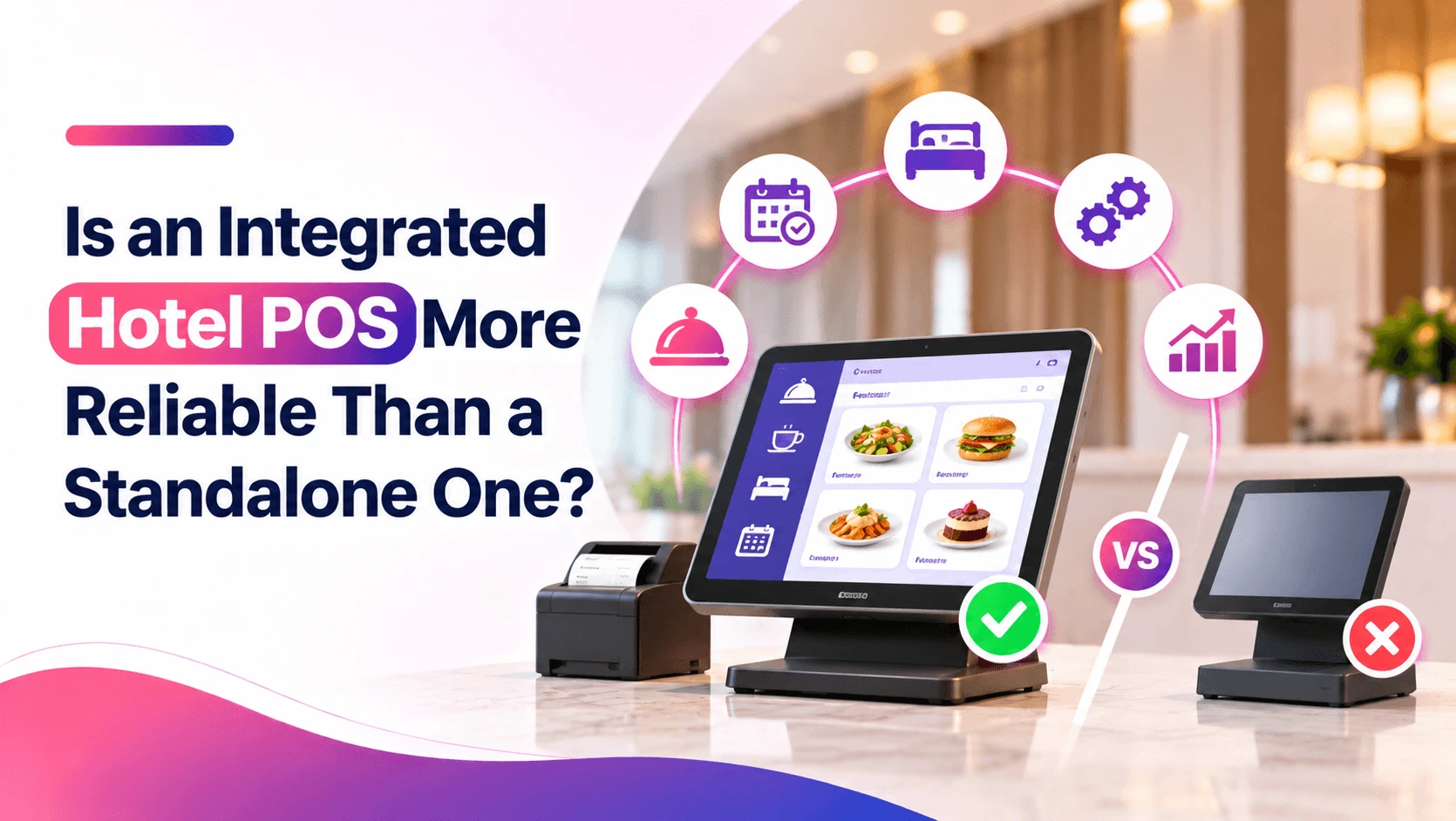
Yes, in most hotels. An integrated hotel POS is part of the same system as the front desk, so a restaurant or bar bill goes onto the guest’s room bill on its own. A standalone POS keeps outlet sales in a separate system, and staff have to carry each charge across by hand. Every hand step is a chance to miss a charge, post it to the wrong room or enter the wrong amount. The one exception is a hotel that has no room charges at all, such as a hotel with only a walk-in cafe. There, a standalone POS can work fine.
It is 11 pm and the hotel restaurant is busy. A guest in Room 214 orders dinner and says, “Put it on my room.” The waiter writes the room number on the bill. Somebody should take that slip to the front desk, but nobody has time. The next morning the guest checks out early, and the dinner never gets onto the room bill.
No one did anything wrong on purpose. The two systems just cannot talk to each other, so the charge depended on a piece of paper getting from one desk to another.
That gap is what this guide is about. It explains what “integrated” and “standalone” really mean, where each one breaks, and how to choose.
Why Is an Integrated Hotel POS More Reliable?
An integrated POS is more reliable because nobody has to copy anything. The sale is entered once, and the same record reaches the room bill, the daily sales report and the stock count.
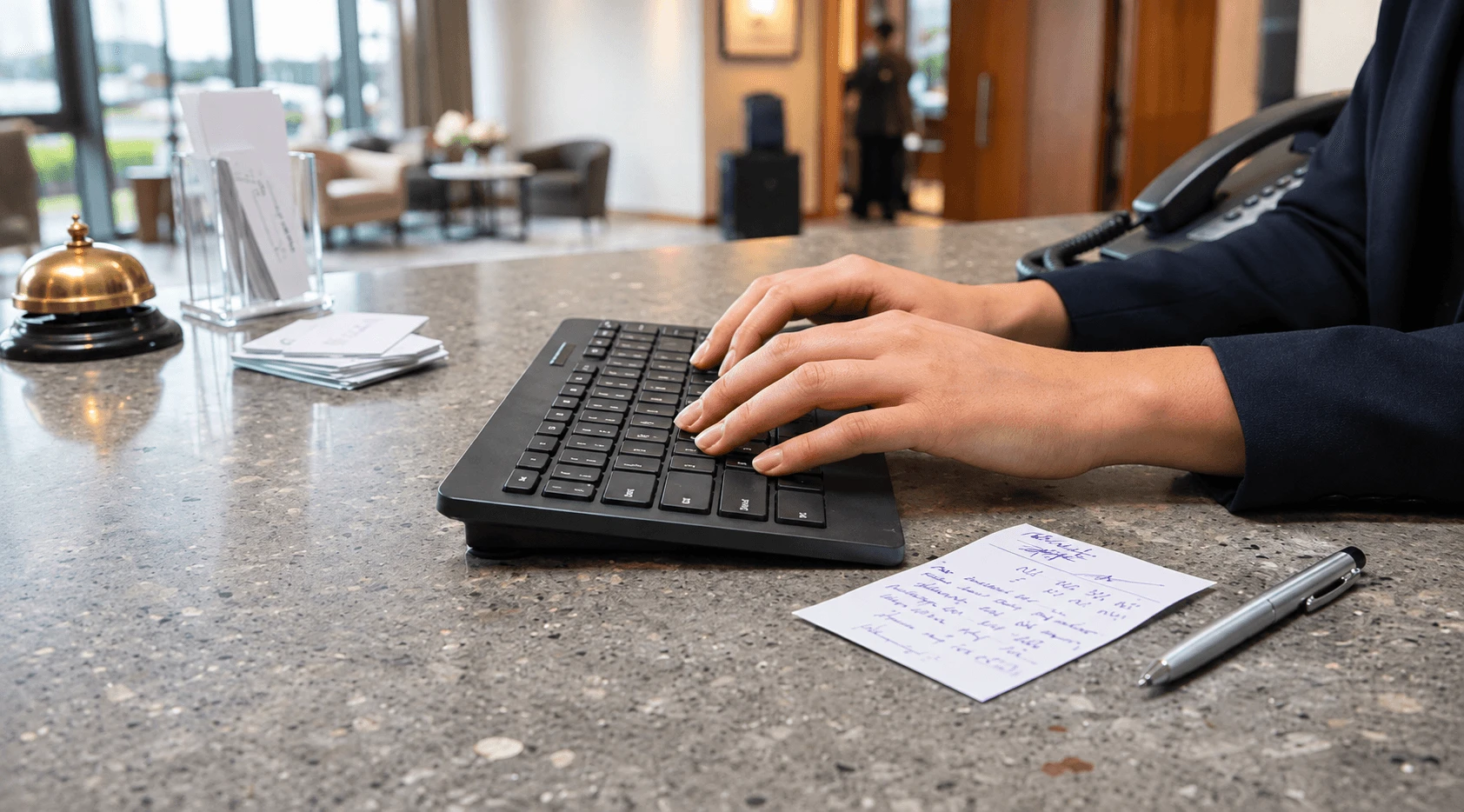
With a standalone POS, the same sale often gets typed in two or three times. Webrezpro says that when the PMS and POS are not integrated, restaurant charges and other add-on products and services charged to a guest’s room must be communicated to the front desk and added to the folio manually. Stayntouch adds that without POS-PMS integration, accounts teams spend hours daily matching restaurant sales against hotel guest folios, and lost revenue from walk-away charges is common.
Here is what “reliable” means in daily work:
- Charges reach the room bill.: A room charge does not wait for a slip of paper to reach the front desk.
- The right room gets the charge.: Staff pick the guest from the in-house list instead of typing a room number from memory.
- The numbers match at night.: Outlet sales and room bills come from the same record, so the end-of-day check has far fewer gaps to explain.
- Checkout is calm.: The guest sees every charge at checkout, not a surprise one added later.
One honest point, though. Not every “integrated” system is equally reliable. Some are two separate products joined by an interface. If that link drops, charges can pile up or fail without anyone noticing. A POS built into the same platform as the front desk avoids that weak spot, because there is no link between two systems to break.
Integrated Hotel POS vs Standalone: What Is the Difference?
A standalone POS is its own system. It takes orders and prints bills, but it does not know who is staying in the hotel. An integrated POS is connected to the hotel’s property management system (PMS), or is part of it, so it knows each guest, their room and their bill.
| Standalone POS | Integrated hotel POS | |
|---|---|---|
| Knows which guests are in-house | No | Yes |
| Charge to room | Paper slip or re-typing at the front desk | Posted to the room bill when the order is billed |
| Restaurant, bar, room service and banquet sales | Often in separate tools or reports | In one place |
| End-of-day matching | Staff compare two sets of numbers | One record, so fewer gaps |
| Upfront cost | Usually lower | Usually higher |
| Long-term cost | Higher staff time and missed charges | Lower, according to Shiji |
| Best for | Walk-in-only outlets with no room charges | Hotels where guests charge food and drinks to the room |
On cost, a Shiji interview on hotel payment systems lists standalone systems with a lower upfront cost and integrated ones with a higher upfront cost, lower long-term cost. The interview says the long-term saving comes mainly from reduced labour costs
What Goes Wrong With a Standalone POS in a Hotel?
Most problems with a standalone POS come from the moment when a sale has to move from the outlet to the front desk. These are the common ones.
1. Missed room charges. The paper slip gets lost, or the guest checks out before it arrives. That money is usually gone for good.
2. Charges on the wrong room. Room 214 becomes Room 241 when someone types fast. One guest gets a bill they did not run up, and the other guest pays nothing.
3. Double entry. The bill is typed into the POS and then typed again at the front desk. Sometimes it gets added twice, and the guest disputes it.
4. Tax and total mismatches. If the two systems handle tax or service charge in different ways, the totals stop matching. Hotelogix lists Missed charges, tax errors, and delayed updates among the main causes of hotel billing errors.
5. A long night audit. Someone has to compare the outlet report with the front desk report line by line and chase every gap.
6. No single view of F&B. The F&B manager cannot see restaurant, bar, room service and banquet sales together without pulling reports from different places.
When Is a Standalone POS Good Enough?
A standalone POS can be the right choice when the outlet does not need to know who the hotel guests are. For example:
- A cafe or bakery inside the hotel where everyone pays at the counter and nobody charges to a room.
- An outlet run by an outside operator under its own business name.
- A short pop-up or event bar that takes cash and card only.
In these cases there is no room charge to carry across, so the main weakness of a standalone POS does not come up. Once guests start saying “put it on my room”, that changes.
PMS vs POS: What Does Each One Do?
A PMS runs the rooms side of the hotel: reservations, check-in, room status, the guest’s stay and checkout. A POS runs the selling side: taking orders, sending KOTs to the kitchen, managing the menu and printing bills in the restaurant, bar, room service and banquets.
The two overlap at one point, which is the guest’s room bill. That is why the connection between them matters so much. To see how the full set of hotel systems fits together, read this guide to what software is used in hotels.
What Should a Hotel Check Before Choosing a POS?
Before signing up for any hotel POS system, an owner or F&B manager can ask these questions in the demo:
- Is the POS part of the same platform as the PMS, or a separate product joined by an interface?: Built-in usually means fewer points that can fail.
- Can a waiter post a bill to a room in a few taps, using the in-house guest list?: Ask the vendor to show it live, not on a slide.
- What happens if the internet drops?: Ask how orders and bills are handled until it comes back.
- Can all outlets be seen in one place?: That means restaurant, bar, room service and banquets.
- Does it handle KOTs and menu changes?: A price change should reach every outlet at once.
- Does it link sales to stock?: This helps with hotel food cost control.
- What reports does the F&B manager get each day?: Sales by outlet, top items and voids are the basics.
- How long does staff training take?: A POS that waiters find hard will be skipped on busy nights.
For the step-by-step process of putting a restaurant bill on a guest’s room, see how to post restaurant bills to a room.
How Foodleplus POS Fits In
Foodleplus POS is part of the same platform as Foodleplus PMS. It shows billing for every outlet (restaurant, bar, room service and banquet) in one place. It also covers order management, KOTs, menu management, store inventory management and reporting. Restaurant bills can be posted straight to a guest’s room, so the charge does not depend on a paper slip. More details are on the Foodleplus hotel POS system page.
Conclusion
For a hotel where guests charge food and drinks to their room, an integrated hotel POS is more reliable than a standalone one. It removes the hand steps where charges get lost, doubled or posted to the wrong room. A standalone POS still makes sense for outlets that never take room charges. Before choosing, check whether the POS is truly part of the PMS or only linked to it, and ask the vendor to show a room charge live.
FAQs
What is the difference between an integrated and a standalone POS?
Is a standalone POS cheaper for a hotel?
Can a hotel use a standalone POS and still charge food to rooms?
What is the difference between a PMS and a POS?
Does an integrated POS remove all billing errors?
Related Posts

Hospitality
How Can Hotels Handle Language Barriers With Foreign Guests?
12 Nov 2026

Hospitality
What Is FRRO Form C, and How Do Hotels Register Foreign Guests?
12 Nov 2026

Hospitality
Do Homestays Need a PMS? A Simple Guide for Guest Houses
11 Nov 2026