
What Is Guest Experience Management in Hotels? A Plain-English Guide
By Foodle+ Team • • 10 MINS READ
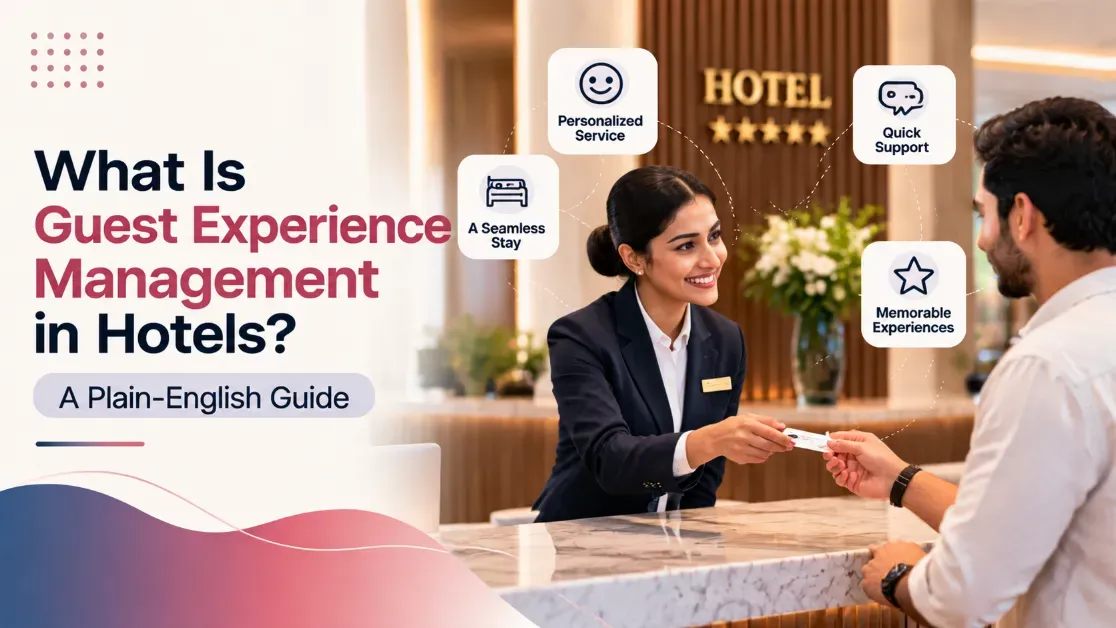
What is guest experience management in hotels? It is how you plan, track and improve everything a guest goes through during a stay, from the first request at the front desk to the review they write after checkout. In simple words, it means guests get what they ask for, and you find out when they do not.
This guide explains the parts of guest experience management, why it matters, how to measure it and when software helps. It is written for hotel owners and managers, so you can start with the team you already have.
- What Does Guest Experience Management Mean for a Hotel?
- What Are the Main Parts of Guest Experience Management?
- Why Does Guest Experience Management Matter for Your Hotel?
- How Do You Measure Guest Experience?
- Do You Need Guest Experience Software?
- What Mistakes Should You Avoid?
- How Can You Start in 30 Days?
- Frequently Asked Questions
- So, Where Should You Start?
What Does Guest Experience Management Mean for a Hotel?
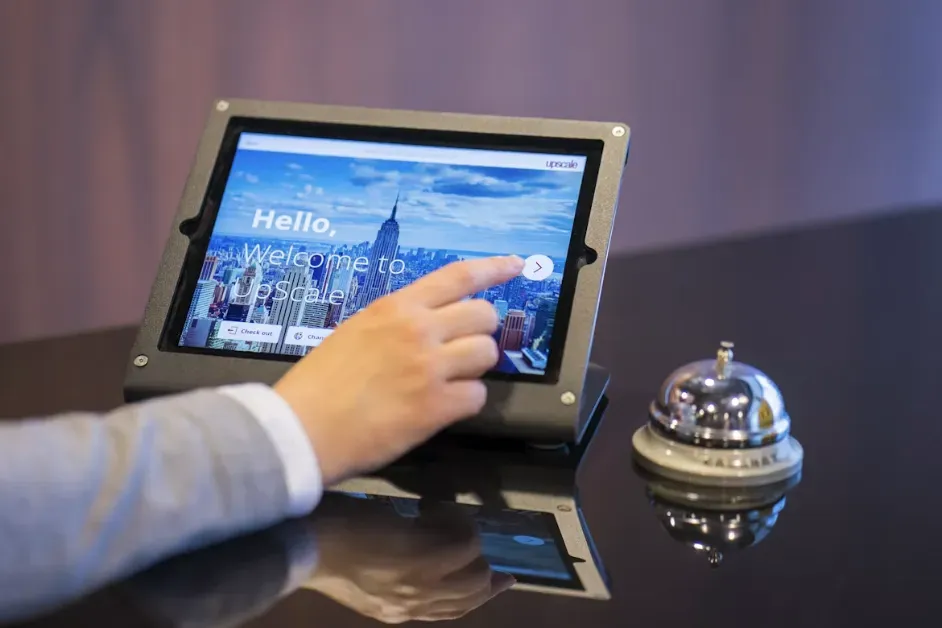
Guest experience management means looking after every contact a guest has with your hotel, and fixing the ones that go wrong. That includes check-in, a towel request, a dinner order, a bill and the message you send after checkout. It is a habit and a system, not one tool or one person's job.
Three terms get mixed up, so here is how they differ.
- Guest experience is what the guest feels during the stay.
- Guest experience management is what you do to shape it: collect requests and feedback, act on them and track the results.
- Customer service is one part of it, usually the reply to a single question or complaint. Management covers the whole stay.
Many articles describe this for big chains with a guest relations team. In a small or mid-size hotel, the same work is shared by the front desk, housekeeping and the manager. So the goal is simple: no request gets lost, and no guest leaves unheard.
Is Your Hotel Losing Guests to Small Requests That Go Unanswered? See how Foodleplus turns each guest request into a tracked task for the right team. [Book a Demo]
What Are the Main Parts of Guest Experience Management?
There are five parts, and each one answers a question the guest is quietly asking.
- Requests. Can I get what I need quickly? Guests ask for towels, food, repairs or a late checkout. What matters is how fast the request reaches the right person and gets done. See how guests can schedule room cleaning from a hotel app for one example.
- Feedback. Will anyone listen? Ask during the stay, not only after it. A problem caught on day one can be fixed. A problem found in a review cannot.
- Personal touches. Do they know me? Note preferences such as room type, food choices and special days, so the next stay feels familiar.
- Extras. Can I enjoy more? Offer a room upgrade, a dinner table or a spa slot at the moment the guest is likely to say yes.
- Reviews. What will others hear? Ask happy guests to post a review, and reply to every review you get.
The same parts show up at every stage of a stay.
Do You Know What Guests Think Before They Write a Review? Talk to our expert about in-stay feedback that helps you fix problems before checkout. [Talk to Our Expert]
Why Does Guest Experience Management Matter for Your Hotel?

It matters because guests judge you on how well you deliver, not on what you promise. Shiji's 2026 Guest Experience Benchmark, covered on Hospitality Net, puts the global Guest Review Index for 2025 at 86.7%, up 0.5 points on the year before. The article says satisfaction now depends on execution, and that markets with stable staffing did better than those facing labour shortages.
The same article flags cleanliness as the weakest department in peak months. Cleanliness on a busy day comes down to tasks, timing and handover, which is the daily work of guest experience management.
Speed counts too. In Shiji's Q3 2025 benchmark, the average time hotels took to reply to reviews fell to 3.0 days, from 4.7 days in Q3 2023. If the average is three days, a hotel that replies after a week looks slow next to its neighbours.
For your hotel, good guest experience management means:
- Fewer repeat complaints, because you see the pattern and fix the cause.
- Better reviews, because problems get solved before checkout.
- More revenue per guest, because offers reach people while they are in the hotel.
- Less pressure on the front desk, because not every request comes by phone.
Want More Revenue From the Guests Already Staying With You? Get a free audit of how your hotel sells rooms, dining and extras to in-house guests. [Get Your Free Hotel Revenue Audit]
How Do You Measure Guest Experience?
Track four simple numbers to start.
- Average review rating on Google and other sites, month by month.
- Time to finish a request, from the moment a guest asks to the moment it is done.
- Repeat guests, meaning the share of bookings from people who stayed before.
- Complaints per 100 stays, and how many you fixed before checkout.
Net Promoter Score, which asks guests how likely they are to recommend you, is a useful extra. Do not chase a number for its own sake. Use the scores to find the one department that needs help first, and check them on the same day each week.
Do You Need Guest Experience Software?
Not on day one. A small hotel can start with a notebook and a daily huddle. Software helps when requests arrive from many places, calls go unanswered, or you cannot say how long a request took.
A hotel guest experience platform is software that takes guest requests, sends them to the right team, collects feedback and keeps guest records in one place. When you compare options, look for these:
- Guests can ask without an app or a phone call, for example by scanning a QR code in the room.
- Each request goes to the right department and shows its status.
- Feedback is collected during the stay and after it.
- Guest details and preferences are saved for the next stay.
- It works with your front desk and billing, so staff do not enter things twice.
- Your team can learn it in days, not weeks.
Foodleplus Guest Experience Software covers these. Guests scan a room QR code in their mobile browser, with no app to download, to order dining, spa and housekeeping services, in five languages. Requests go to housekeeping, F&B or maintenance and are tracked in real time. It also supports in-stay feedback, review prompts for Google and TripAdvisor, Guest Records with stay history and preferences, and offers made at the right moment. In a Foodleplus case study, a resort in Goa saw 30% more dining orders.
For the wider picture, read how hotel automation improves day-to-day operations.
What Mistakes Should You Avoid?
- Asking for feedback and doing nothing with it. Guests notice, and stop answering.
- Asking too often. One short question during the stay and one after is enough.
- Leaving it to the front desk alone. Housekeeping, F&B and maintenance shape the stay as much as the desk does.
- Chasing a score instead of fixing the cause behind it.
- Giving every guest the same offer. A family and a business traveller want different things.
How Can You Start in 30 Days?
- Week 1: List every way a guest asks for something, such as phone, desk visit or message. Pick the three most common requests.
- Week 2: Give each of those requests one owner and a time limit. Write it on a single page and share it with the team.
- Week 3: Ask each guest one question during the stay, such as "Is there anything we can fix today?" Write down the answers.
- Week 4: Read the notes and reviews with your team. Choose one problem to fix and one thing to keep doing.
- After day 30: Look at your four numbers and decide whether a tool would save your team time.
FAQs
What is guest experience management in a hotel?
What is the difference between guest experience and customer service?
What is a hotel guest experience platform?
How do hotels measure guest experience?
Do small hotels need guest experience management?
What are the main stages of the guest experience?
So, Where Should You Start?
You do not need a large budget to manage guest experience well. This week, list how guests ask for things, give each request an owner and ask every guest one question. In a month, look at your numbers and decide what to fix next.
Related Posts

Hospitality
How Can Hotels Handle Language Barriers With Foreign Guests?
12 Nov 2026
Guest Experience
How Should a Hotel Respond to Negative Reviews? (With Examples)
4 Nov 2026

Guest Experience
How Can a Hotel Catch Guest Complaints Before They Become Bad Reviews?
23 Oct 2026