
How Do You Avoid Double Booking and Overbooking at a Hotel?
By Foodle+ Team • • 11 MINS READ
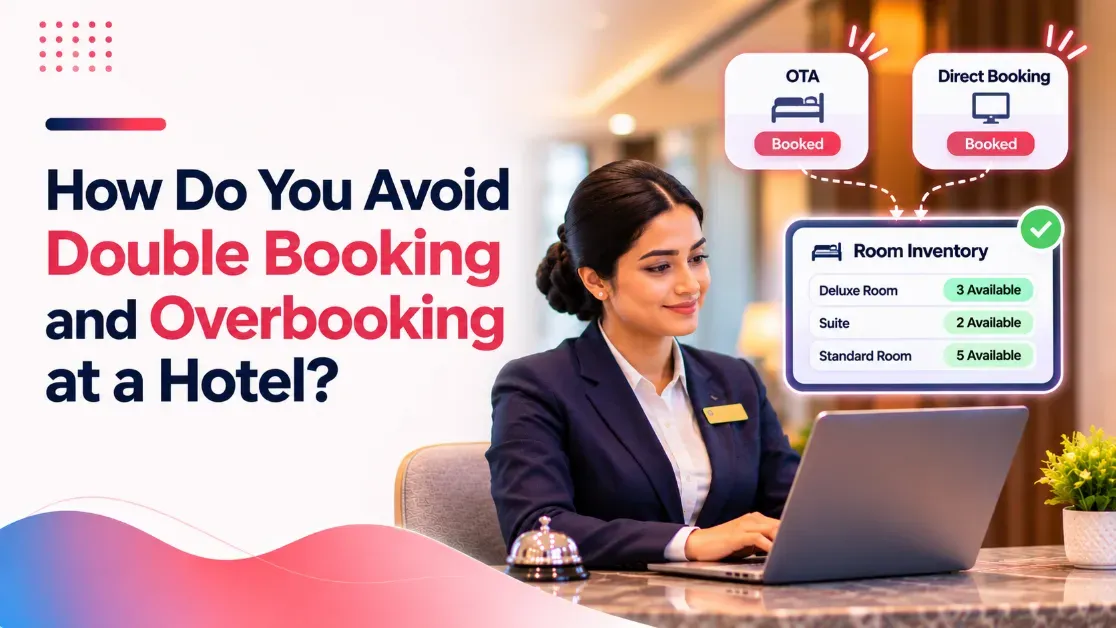
Quick Answer: To avoid double booking hotel rooms, keep one system as the single source of room availability, stop editing availability inside booking site extranets, check room mapping after every change, and enter walk-ins and phone bookings the minute they happen. Overbooking is a separate choice, and it needs its own limit.
Two guests. One room. Both holding a confirmation number, both standing at the desk, and neither one wrong.
That is a double booking, and it almost never starts at the desk. It starts hours earlier, in a gap between systems or in a shortcut somebody took on a busy evening.
The good news is that most of the fixes are habits, not new software. The nine habits come first below, then the causes behind them, then what the front office should do on the night it still happens.
If two guests are standing at the desk right now, skip down to the section on what to do when a hotel is overbooked.
How Do You Avoid Double Booking at a Hotel?
To avoid double booking hotel rooms, pick one system to be right and make every other system follow it. That single rule prevents more double bookings than any feature on a comparison chart. These nine habits make it real.
- Name one source of truth for availability.: Usually the property system, the software the front desk uses for rooms and reservations. Everyone updates there, and nowhere else.
- Stop hand editing availability in extranets.: An extranet is a booking site's own admin panel, where a hotel can change rooms and rates directly. Edits made there skip the main system, so the two quietly disagree. If the team must do it in an emergency, note it and correct the source system the same shift.
- Re-check room mapping after every change.: Room mapping is the link between each room type in the property system and the matching room type on each booking site. A new room type, a renamed category, a changed occupancy or a new rate plan can break it. Check it the same day, not next month.
- Enter walk-ins and phone bookings immediately.: Before the key is handed over, not after the rush. This one habit removes a large share of desk-caused double bookings.
- Block out-of-order rooms the moment maintenance takes them.: A room that cannot be sold should not look sellable for even an hour.
- Reconcile for ten minutes every morning.: Count rooms sold in the system against what each booking site shows for the next few nights. Catch the mismatch at 9 am instead of 9 pm.
- Send a test booking after every change.: New channel, new room type, new rate plan. Book one room yourself, watch it drop everywhere, then cancel it and watch it come back.
- Make failed updates somebody's job.: Rejected and delayed updates usually sit in an error log nobody opens. Name the person who checks that log each morning, or the system stays quietly silent when it matters.
- Ask for a card guarantee on direct bookings.: It does not prevent a system error, but it cuts the no-show pressure that pushes hotels to overbook in the first place.
Most of this is routine, which is exactly why it slips. Give the morning check and the error log to one named person per shift and it holds.
Why Do Hotels Get Double Bookings?
Most double bookings trace back to a handful of causes. Some are technical. The rest happen at the desk. Knowing which one hit tells you which habit above was skipped.
The sync window. Every booking site, the channel manager and the property system hold their own copy of availability. A channel manager is the tool that passes room counts between the property system and the booking sites. When the last room sells on one site, that number has to drop everywhere else. If the update is slow, fails quietly, or waits in a queue on the booking site's end, a second guest can book the same room in that gap. The realistic goal is shorter gaps and visible failures, not zero risk.
Broken room mapping. Rename a category, change its occupancy, or add a new one, and the link to a booking site's room type can quietly point at the wrong inventory. Updates then reduce the wrong room type, or nothing at all.
Manual edits inside booking site extranets. Somebody opens the extranet and adds two rooms by hand because a cancellation came through. The next automatic update either wipes that change or leaves it sitting on one platform only. Now two systems disagree.
Calendar sync instead of a real connection. Small properties often link rooms to booking sites with an iCal calendar feed, a simple file of booked dates that each site reads. An iCal feed updates on a timer, not the moment a room sells, and it carries dates only. No rates, no restrictions, no instant close-out. For one or two listings it is survivable. Across four or five, it is a double booking waiting for a busy weekend.
Walk-ins, phone and enquiry bookings entered late. A guest pays cash at 9 pm, the receptionist writes it on a pad and plans to enter it after the rush. The room shows as free online for another ninety minutes. The same gap opens when a booking arrives by website enquiry form or a chat message, since neither one checks live availability before the guest is told yes.
An outage nobody noticed. The connection drops for an hour, updates stop flowing, and the dashboard still looks normal. If failed updates are not reported to a named person, nobody finds out until two guests arrive.
Rooms out of order that nobody blocked. A tap breaks, maintenance takes the room, and the block is never entered. The system still counts it as sellable.
Group blocks and unreleased holds. A block is held for an event, the event shrinks, and the unused rooms are released twice or counted twice.
Double Booking and Overbooking Are Not the Same Problem
Hotel overbooking is deliberate. Hotel double booking is an accident. They get treated as one topic, and that is why the advice around them is usually useless.
| Overbooking | Double booking | |
|---|---|---|
| Who caused it | The hotel, on purpose | A system gap or a manual slip |
| Why | To cover expected no-shows and late cancellations | Availability was wrong somewhere |
| How many rooms | A planned number, decided in advance | Unknown until someone notices |
| How to fix it | Set a limit and review it every season | Remove the cause |
One is a revenue decision with a known risk. The other is an error nobody chose. The steps that prevent overbooking at a hotel are not the steps that avoid double booking, so treat them separately.
What Should a Front Desk Do When a Hotel Is Overbooked?
Someone has to be moved. Decide who before the lobby fills up, not while the guest is watching.
In hotel terms this is called walking a guest: the hotel finds them a room at another property for the night and covers the cost.
Do the groundwork in the quiet season. Agree a standing walk rate with two nearby properties of similar standard, swap manager phone numbers, and keep those numbers at the desk. Hunting for a room at 11 pm on a sold-out night is how a bad situation turns into a terrible one.
Protect first: repeat guests, long stays, guests who prepaid or left a deposit, anyone here for a wedding or an anniversary, and booked groups.
Move first: one-night stays with no prepayment and no card guarantee, and bookings that arrive latest in the evening.
An established hotel front office SOP sets out what the hotel normally covers.
| What the hotel covers | Detail |
|---|---|
| The other hotel | First night's room and tax, at a similar or better property nearby |
| Transport | Taxi or hotel vehicle, both ways |
| The call | So the guest can tell family or office where they are |
| Agent commission | Paid in full if the booking came through an agent |
| The return | If the stay was multiple nights, bring them back the next day and upgrade |
Say it in plain words. Something close to this works:
> I am very sorry. We have a room shortage tonight and I could not hold your room. I have a confirmed room for you at a hotel five minutes away, tonight is on us including the taxi, and I have kept your room here for tomorrow. May I walk you through it?
Give the guest the booking details before they move, not after. Tell the telephone operator and the night team where that guest went. Log the move so the morning manager sees it.
Should a Small Hotel Overbook at All?
For a property under about forty rooms, careful beats clever. In most towns there is no second similar property across the road, and one bad move at midnight costs more than the no-show it was meant to cover.
The pressure behind it is real, though. Reservations that come through booking sites get cancelled far more often than direct ones, so plenty of rooms look sold and do not stay sold.
If the property does overbook, keep it small and evidence based. Most guides stop at "use historical data" and leave it there. Here is the arithmetic, done on the back of the arrivals sheet.
Pull the last twelve months. Count the nights that match tonight: same season, same day of the week, similar occupancy. For those nights, work out the average share of confirmed rooms that never arrived, no-shows plus same-day cancellations. Multiply that share by the number of rooms sold tonight, then take roughly half of the answer. That half is the safety margin, and it is the whole point.
Say 40 rooms are sold and that pattern of night historically loses 5 percent. Five percent of 40 is two rooms. Half of two is one. So one extra room, not two, and none at all if there is no similar property with space tonight.
Three nights override the maths every time: a sold-out town, a long weekend when every nearby property is full, and any night with a group or wedding already in house. On those, sell what exists and nothing more.
A common follow-up is what property management system is best for handling high booking volumes. It is really two questions. One is about the property system that holds rooms and reservations. The other is about the channel connection that feeds the booking sites. This guide to hotel booking software covers the first, and the difference between a PMS and a channel manager covers the second.
FAQs
What is the difference between overbooking and double booking in a hotel?
Who should a hotel walk when it is overbooked?
Does a hotel have to pay for the other hotel when it walks a guest?
How often should a front desk check availability against the booking sites?
Is an iCal calendar link enough to prevent double bookings?
Can a property management system stop double bookings on its own?
Related Posts

Hotel Management Software
How Do Hotels Earn Extra Revenue in the Slow Season?
3 Nov 2026
Hotel Management Software
OTA Listing Mismatch: What to Do When a Guest Argues at Check-in
2 Nov 2026
Hotel Management Software
How to Post Restaurant Bills to a Room: Step-by-Step for Hotels
30 Oct 2026