
Hotel Management Software for 5-Star Hotels: Essential Features to Consider
By Foodle+ Team • 17 Sept • 9 MINS READ
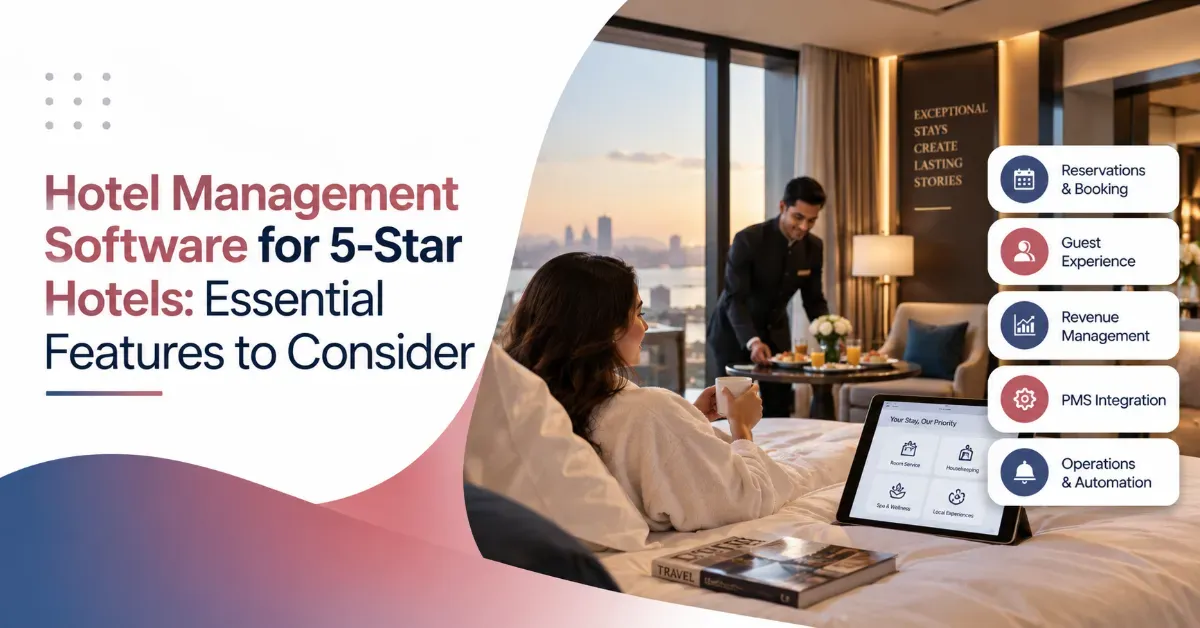
A 5-star hotel needs software that handles deep guest personalization, multi-outlet POS integration across restaurants, bars and spa, a real-time channel manager and commission-free booking engine, banquet and event management, secure tokenised payments, VIP and loyalty tier recognition, and RevPAR and GOPPAR-level reporting. The biggest mistake luxury properties make is choosing a system for its interface polish while ignoring whether the backend actually connects to every outlet.
Here's the thing nobody tells you about luxury hospitality software. The guest never sees it, and that's the entire point.
When a returning guest walks in and the front desk already knows she prefers a high floor, still water instead of sparkling, and a 7 AM wake-up call, that feels like magic to her. Behind the scenes, it's just a system that stored her preferences properly and surfaced them at the right moment.
That gap between what the guest experiences and what the software actually does is what separates real luxury tech from expensive-looking software. Let's get into what genuinely matters.
- Guest Profiles That Remember Everything
- Multi-Outlet POS Integration
- Channel Manager and Commission-Free Booking Engine
- Banquet and Event Management
- Revenue Management and Dynamic Pricing
- Ancillary Revenue and Upselling Tools
- VIP and Loyalty Tier Recognition
- Secure, Tokenised Payment Processing
- Night Audit, Group Blocks and Split Folios
- Reporting That Goes Beyond Occupancy
- Mobile Check-In and Digital Key Access
- The Mistake That Costs Luxury Hotels the Most
- If You Run More Than One Property
- Questions Worth Asking Before You Commit
- Bringing It Together
- FAQs
Guest Profiles That Remember Everything
This is the foundation. Everything else builds on it.
Good hotel management software for 5 star hotels maintains consolidated guest history across every stay, not just the current one. Preferences, past complaints, celebration dates, dietary restrictions, room location requests, all accessible to any staff member who needs them.
Why it matters so much at this tier: your guests are paying for recognition. A ₹40,000-a-night room comes with an unspoken expectation that nobody has to ask them the same question twice.
When your concierge already knows a guest is celebrating an anniversary because it's flagged from last year, that's the moment that earns a repeat booking.
Also Read: Best Hotel PMS Software: How to Choose the Right System for Your Hotel
Multi-Outlet POS Integration
A 5-star property isn't just rooms. It's a fine dining restaurant, a lobby bar, a spa, room service, maybe a pool bar and a banquet operation running at once.
Every one of those generates charges that need to land on the right folio without someone re-keying them manually.
This is where luxury properties get burned. Running the spa on one system, restaurants on another, and rooms on a third creates fragmented guest data and billing errors, the exact opposite of what you're charging a premium for.
Native POS connectivity means charges post straight to the guest folio, with inventory tracking and multi-outlet reporting staying consistent across all of it.
Channel Manager and Commission-Free Booking Engine
Even luxury hotels lose money to OTA commissions. A real-time channel manager pushes every rate and availability change to Booking.com, Expedia, MakeMyTrip and your own website within seconds.
The failure mode here is brutal and specific. Without live sync, one walk-in can double-sell a suite, and at this tier that means relocating a guest who paid premium rates. That's not an inconvenience, it's a reputation problem.
Pair it with a commission-free booking engine on your own site, and the traffic your brand already attracts converts into direct, higher-margin reservations.
Banquet and Event Management
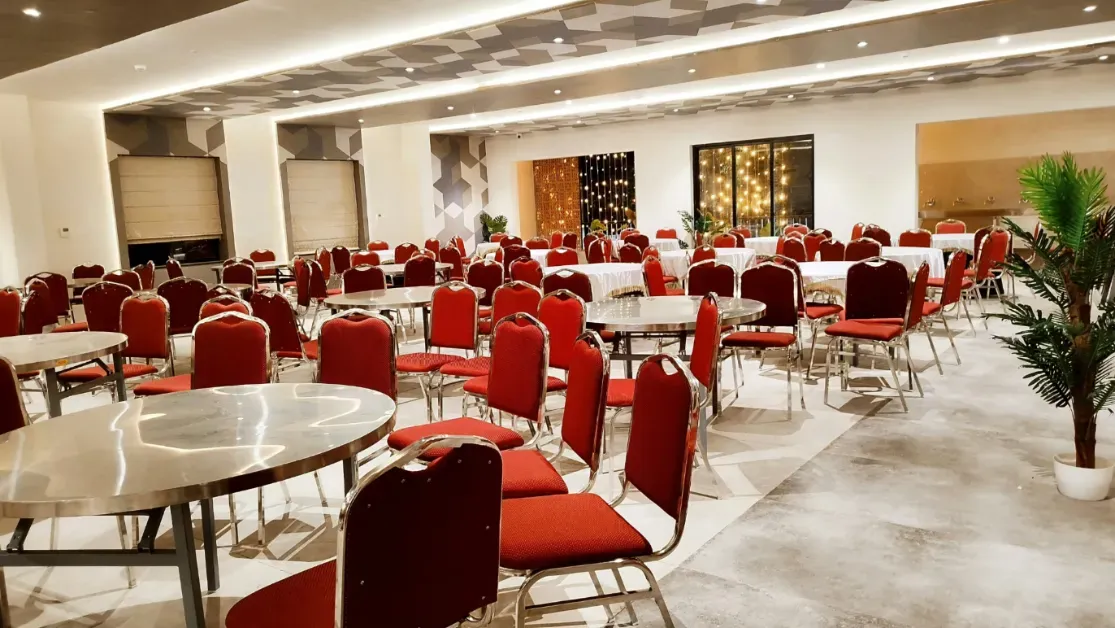
This is the one most software comparisons skip entirely, and it's often where a 5-star property makes serious money.
Weddings, corporate conferences, MICE bookings, and private events need their own workflow: hall inventory, custom F&B packages, setup schedules, and billing that ties back to the same guest or corporate account.
If your banquet operation runs on spreadsheets while rooms run on a PMS, you're losing both revenue visibility and staff hours to reconciliation.
Revenue Management and Dynamic Pricing
Static rates leave money on the table, especially at properties with high ADR where a small rate adjustment moves real revenue.
Dynamic pricing tools adjust room rates based on demand, competitor positioning, and market trends. For a luxury property, this matters most around event dates, festival seasons, and compression nights when the whole market fills up.
The goal isn't just raising rates in peak season. It's protecting rate integrity in slow periods, since discounting a luxury room too aggressively damages brand perception long after the booking.
Also Read: Why Hotels Lose Money Through Manual Operations (And How Hotel Operations Automation Solves It)
Ancillary Revenue and Upselling Tools
Your room rate is only part of the guest's total spend.
Good software surfaces upsell opportunities at each stage of the guest journey: suite upgrades at check-in, early arrival, late checkout, spa packages, airport transfers, and private dining.
The luxury nuance here matters. An upsell prompt at a 5-star property should feel like an offer, not a transaction. Software that lets you time these based on guest tier and stay history gets this right. A generic pop-up asking every guest to upgrade does not.
VIP and Loyalty Tier Recognition
Hotel software for luxury hotels should configure automated guest communication based on loyalty status, VIP flags, or rate type.
A platinum-tier member and a first-time OTA booking shouldn't get identical pre-arrival messaging, because they aren't identical guests to your business.
In practice: pre-arrival messages tailored by tier, alerts so the duty manager knows a VIP arrives at 3 PM, and post-stay follow-up that reflects how much that guest matters to your revenue.
Secure, Tokenised Payment Processing
Luxury guests often include high-profile individuals, corporate accounts, and international travellers. A data breach here isn't just a compliance issue, it's a headline.
Look for PCI-compliant processing with card tokenisation, meaning sensitive card data never sits on your own systems. Support for multiple payment modes matters too: international cards, UPI, net banking, and digital wallets.
Pre-authorisation handling is worth checking specifically, since luxury properties routinely hold larger incidental amounts than budget hotels.
Night Audit, Group Blocks and Split Folios
These sound technical, and they are, but they're also where daily operations quietly break down.
Group blocks matter for weddings and corporate bookings where twenty rooms need to be held under one account. Split folios matter when a company pays for the room while the guest settles their own bar tab. Night audit matters because someone has to close the books accurately every single night.
A system that handles these cleanly saves your finance team hours. One that doesn't creates a reconciliation problem every morning.
Reporting That Goes Beyond Occupancy
At this level, occupancy alone tells you almost nothing useful.
A good hotel PMS for 5 star hotels tracks ADR and RevPAR as a baseline, then goes deeper into GOPPAR, departmental performance breakdowns, forecast versus actual comparisons, and source-of-business analysis.
Why this matters more for luxury: your profit isn't coming from rooms alone. When your spa, F&B outlets, and banquets each contribute meaningfully, you need departmental visibility to know which one is actually carrying the property this quarter.
Mobile Check-In and Digital Key Access
Contactless arrival isn't a pandemic leftover anymore. It's a genuine luxury expectation.
Digital registration capture, ID scanning, automated key encoding, and express check-out all reduce the thing luxury guests hate most: standing at a desk waiting.
There's a nuance worth naming. Mobile check-in at a 5-star property shouldn't eliminate human contact, it should redirect it. Skip the paperwork so your staff spend that time on a personal welcome instead of a signature and a photocopy.
The Mistake That Costs Luxury Hotels the Most
Let's be direct, because this comes up constantly.
Luxury properties tend to prioritise how a system looks over whether its backend genuinely integrates. That choice creates billing errors and service delays down the line.
A beautiful interface that doesn't talk to your spa POS is worse than a plain one that does. Your guest doesn't see the dashboard. They see a bill with a missing spa charge, or a delayed checkout while someone reconciles three systems by hand.
The software should disappear into the background and quietly support flawless service, not impress you during the demo and frustrate your team every day after.
If You Run More Than One Property
For hotel groups, a few capabilities shift from nice-to-have to essential.
Portfolio-wide guest profiles mean staff recognise a repeat guest at any property, with stay history following them across locations. Cross-property reservations let your front desk check live availability at sister properties, so a sold-out night becomes a retained booking instead of a lost one.
Consolidated reporting across the group means head office isn't manually exporting spreadsheets every month.
Questions Worth Asking Before You Commit
- Does the system post charges from every outlet, spa, restaurants, bars, banquets, directly to the guest folio, or does something need manual entry?
- Can guest preferences and VIP flags be seen by every department, or do they live in one team's system?
- How does the channel manager handle a rate change, and how many seconds until it reflects on every OTA?
- Is card data tokenised, and is the platform PCI-compliant?
- Does banquet and event management sit inside the same system, or is it a separate module with separate billing?
- What exactly does reporting cover beyond occupancy and ADR, specifically GOPPAR and departmental breakdowns?
Ask for live demonstrations rather than feature-list confirmations. A vendor showing you a real folio with a real spa charge posting automatically is telling you something a sales deck never will.
Ready to Give Every Guest the Recognition They Expect? Talk to our team about guest profiles and multi-outlet integration built for luxury properties.
Bringing It Together
Essential features for a 5-star property come down to depth rather than breadth.
Rich guest profiles that make recognition effortless. POS integration keeping every outlet on one folio. A channel manager that prevents the double-booking you can't afford. Banquet management for the revenue stream nobody talks about. Secure payments, smart upselling, and reporting that tracks profit rather than just rooms sold.
Get the backend integration right, and the polish takes care of itself.
FAQs
What features matter most in hotel management software for 5-star hotels?
Why is POS integration so important for luxury hotels?
Do luxury hotels need banquet management in their PMS?
What is the most common software mistake luxury hotels make?
What reporting should a luxury hotel PMS provide?
Related Posts
Hotel Management Software
Hotel Software for Hotel Owners: Features That Simplify Hotel Management
19 Sept
Hotel Management Software
Hotel Management Software for 3-Star Hotels: Features That Matter
17 Sept
Hotel Management Software
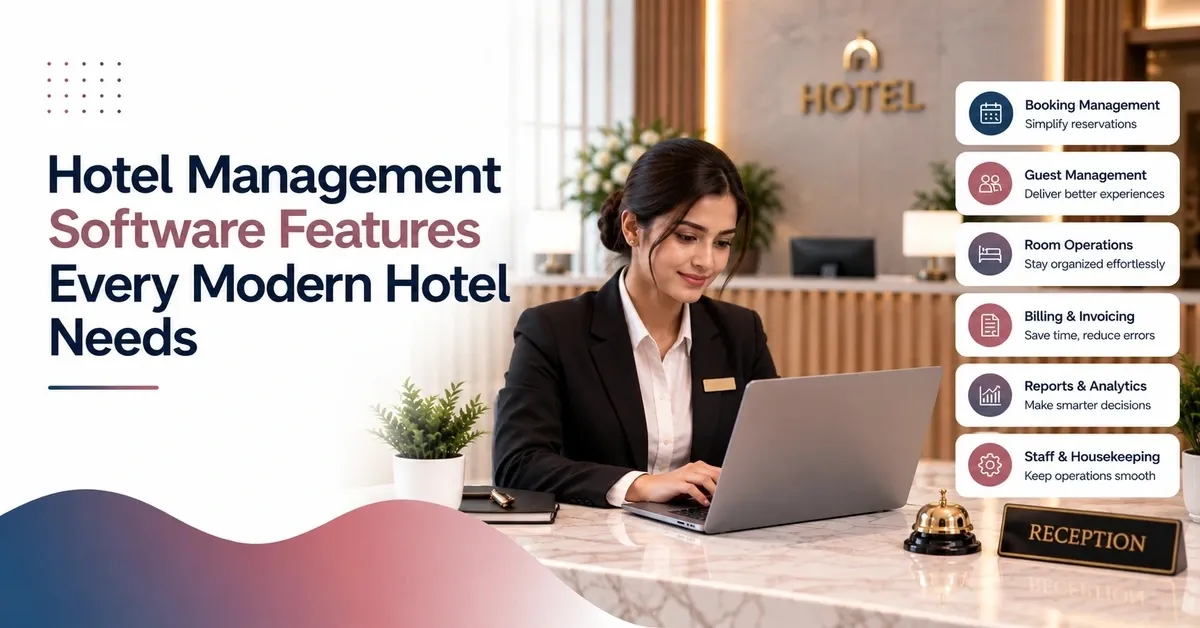
Hotel Management Software Features Every Modern Hotel Needs
15 Sept